

Table of Contents
- Pros and Cons of Renting Out Your Basement: The Short Answer
- Basement Rental Income: What You Can Realistically Earn
- Cost to Finish a Basement for Rental: What to Budget For
- Basement Apartment Legal Requirements You Cannot Skip
- Landlord Responsibilities for Basement Tenants
- Privacy, Noise, and Living With a Tenant
- Insurance, Liability, and Mortgage Implications
- Is Renting Out Your Basement Right for You?
- Frequently Asked Questions
Last Updated: October 12, 2026
Pros and Cons of Renting Out Your Basement: The Short Answer
Renting out your basement can turn unused square footage into steady monthly income, but it also brings legal requirements, privacy trade-offs, and real upfront costs. The pros and cons of renting out your basement come down to three questions: what the space earns, what it costs to make it legal and livable, and how much shared living you can tolerate.
Here is the honest version most guides skip. A basement suite is not a passive investment. It is a small construction project followed by a long-term management job.
The Pros at a Glance
- Extra income that helps cover mortgage payments and rising housing costs
- Affordable housing option for tenants in a tight rental market
- Better use of space that otherwise sits empty or stores boxes
- Increased property value when the work is permitted and done well
- Flexibility to host family, rent long-term, or try short-term stays
The Cons at a Glance
- High upfront renovation costs before you collect a single rent check
- Legal requirements around egress windows, ceiling height, and fire safety
- Lost privacy and added noise in shared living spaces
- Ongoing landlord duties: repairs, maintenance, and tenant issues
- Insurance and tax complexity that catches first-time landlords off guard
The pros are financial and practical. The cons are legal, structural, and personal. Budget your time and patience as carefully as your money.
Basement Rental Income: What You Can Realistically Earn
Basement rental income depends far more on your local rental market than on the size of the space. Two identical basements in different neighborhoods can command very different monthly rents, and no national average tells you what your specific street will support.
A practical approach is to research comparable units nearby. Look at what basement apartments, studio units, and one-bedroom rentals actually list for, not what a blog says is typical. Then subtract your real costs before you call anything profit.
Calculating Net Income After Expenses
Gross rent is the number that feels exciting. Net income is the number that matters. Before you count a dollar as profit, account for:
- Vacancy periods between tenants
- Utilities, if you include them in the rent
- Routine maintenance and repairs
- Property taxes on the added living space
- Insurance premiums for a rental unit
- Any property management or screening costs
Many homeowners find that net income lands well below their first estimate. That does not make the project a bad idea. It just means the decision should be based on the net figure, not the headline rent.
Short-Term Versus Long-Term Rental
| Factor | Long-Term Rental | Short-Term Rental |
|---|---|---|
| Income stability | Predictable monthly rent | Seasonal and variable |
| Tenant turnover | Low | High |
| Management effort | Moderate | Constant |
| Privacy impact | Ongoing | Intermittent |
| Furnishing needs | Minimal | Full setup required |
Long-term rentals suit homeowners who want steady income and less involvement. Short-term rentals can earn more per night but demand cleaning, scheduling, and guest communication. Many local rules treat the two categories differently, so confirm which type your area allows before you commit.
Cost to Finish a Basement for Rental: What to Budget For
The cost to finish a basement for rental varies widely based on size, existing conditions, and how much plumbing or electrical work is needed.
The biggest cost drivers are moisture control, egress, and mechanical work. A dry, code-compliant basement with a separate entrance costs more than a simple open room, but it also rents for more and passes inspection.
If your basement has had moisture issues, treat waterproofing as part of the renovation, not a separate problem. Skipping it means mold, damaged finishes, and a tenant complaint within the first wet season.
Finishing a basement without addressing moisture first is the most expensive mistake we see. The finishes fail, the tenant leaves, and you pay twice.
Basement Apartment Legal Requirements You Cannot Skip
Basement apartment legal requirements are set by state and local building codes, and they are not optional. What makes them tricky is that the same basement can be perfectly legal in one jurisdiction and a code violation a few miles away.
Because rules vary by jurisdiction, always confirm the specifics with your local building department before construction begins. But you can walk in prepared. Use this checklist as a starting point, then verify each item against your local code.
The Jurisdiction-Aware Compliance Checklist
- Zoning and use classification. Confirm that a basement apartment is an allowed use in your zoning district. Some areas permit accessory dwelling units (ADUs) by right, some require a conditional use permit, and some prohibit them entirely. Ask specifically whether your basement counts as an ADU or a rooming unit, because the rules differ.
- Building permit and inspections. A finished basement with a sleeping area, kitchen, or bathroom almost always requires a building permit and multiple inspections (framing, electrical, plumbing, insulation, final). Unpermitted work can force you to tear out finishes, pay fines, and disclose the violation when you sell.
- Egress windows. Every sleeping room needs at least one operable window or door that meets the local minimum for clear opening width, height, and sill height. In many jurisdictions the sill cannot be more than 44 inches above the floor, and the clear opening must be at least 5.7 square feet. Confirm the exact numbers with your building department.
- Ceiling height. Most codes require a minimum ceiling height, commonly 7 feet for habitable space, though some allow 6 feet 8 inches under beams or ducts. Low ceilings can fail inspection and make the space feel cramped.
- Fire separation. A rental unit in a single-family home often needs a fire-rated separation between the unit and the rest of the house, plus a self-closing door. This is one of the most commonly missed requirements.
- Smoke and carbon monoxide alarms. Install interconnected smoke alarms in each sleeping room and outside each sleeping area, and carbon monoxide alarms if the home has fuel-burning appliances or an attached garage. Many jurisdictions now require sealed, 10-year battery alarms.
- Ventilation and moisture. Bathrooms and kitchens need mechanical ventilation. Basements also need a moisture-control strategy, because damp air leads to mold and failed inspections.
- Electrical and plumbing permits. Any new circuits, outlets, or plumbing fixtures require separate permits and licensed trades. Do not let a handyman pull permits on your behalf unless they are licensed for that trade.
- Parking and access. Some jurisdictions require an off-street parking space per rental unit. Others require a separate entrance or a direct path to the unit.
- Rental license or registration. Many cities require a rental license, registration, or periodic inspection. Fees and renewal cycles vary, so ask what the annual cost and inspection schedule look like.
Egress Windows, Ceiling Height, and Fire Safety
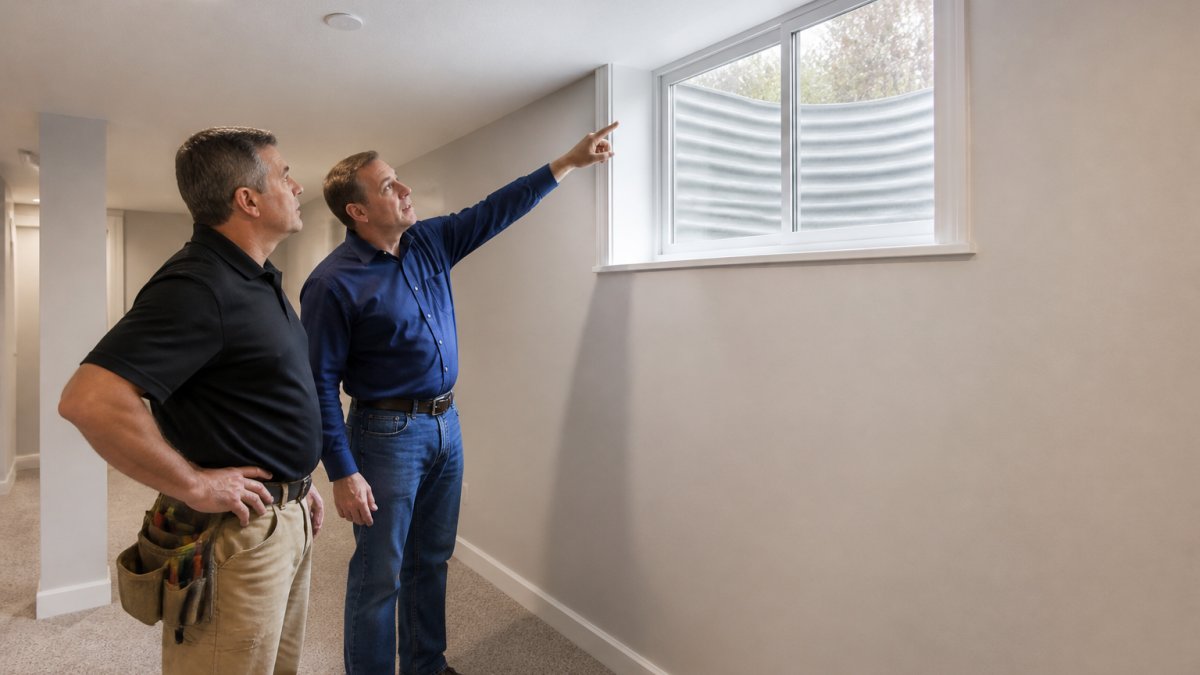
An egress window is a window large enough for a person to escape through in an emergency. It is the single most common requirement that turns a simple basement finish into a structural project, because adding one may mean cutting concrete.
Ceiling height matters too. Low ceilings make a space feel cramped and can fail inspection. Fire safety requirements typically include smoke alarms, carbon monoxide detection, and separation between the rental unit and the rest of the home.
Do not assume that because a neighbor rents out a basement, your basement is legal. Enforcement is often complaint-driven, and a disgruntled tenant or neighbor can trigger an inspection that uncovers unpermitted work. The cost to legalize after the fact is almost always higher than doing it right the first time.
Ask your local building department for the checklist in writing before you draw plans. It is free, and it prevents costly rework later. If the department offers a pre-application meeting, take it. Bring a simple floor plan and ask what triggers a permit, what inspections are required, and whether your zone allows a rental unit at all.
U.S. Department of Housing and Urban Development guidance on accessory dwelling units
Landlord Responsibilities for Basement Tenants
Landlord responsibilities for basement tenants go well beyond collecting rent. You are responsible for habitable conditions: working heat, safe electrical systems, functioning plumbing, and prompt repairs. You also handle the legal side, from a written lease agreement to security deposit rules that vary by state.
Tenant Screening and Lease Agreements
Tenant screening is your best protection against problems. Check rental history, verify income, and contact previous landlords. A written lease agreement should spell out rent, utilities, maintenance duties, and quiet hours.
Household compatibility matters more in a shared building than in a separate property. A tenant who works nights and sleeps during the day will clash with a family that rises early.
Privacy, Noise, and Living With a Tenant
Privacy is the trade-off homeowners underestimate most. Even with a separate entrance, sound travels through shared floors and walls. Footsteps, appliances, and conversation carry in ways that are easy to forget until someone is living below you.
Soundproofing during the build is far cheaper than retrofitting later. Insulation, resilient ceiling channels, and solid-core doors make a measurable difference.
Noise complaints tend to run both directions. Your tenant hears your household, and you hear theirs. Setting expectations in the lease and choosing tenants whose schedules match your household rhythm prevents most conflict.
Insurance, Liability, and Mortgage Implications
Your standard homeowner’s policy likely does not cover a rental unit. You will need to notify your insurer and often add landlord coverage or a separate policy.
Liability matters too. If a tenant or guest is injured in a space you rent, you carry the exposure. Proper permits, inspections, and documented safety features reduce that risk.
Check your mortgage terms as well. Some loans restrict renting part of the property, and violating those terms can trigger penalties. A quick call to your lender clarifies where you stand.
Is Renting Out Your Basement Right for You?
Renting out your basement makes sense when the numbers work after expenses, the space can legally be rented, and you can accept sharing your home. It makes less sense when the renovation budget is tight, the legal path is unclear, or privacy is non-negotiable for your household.
The homeowners who succeed treat this as a construction project first and a rental second. Get the space dry, legal, and well-built, and the income follows.
That is where Berry Basements comes in. We handle the complex parts of a rental-ready basement: waterproofing, egress windows, structural changes, and the HVAC and plumbing work that trips up most do-it-yourself projects.
Frequently Asked Questions
Can you legally rent out your basement?
It depends on your local zoning and building codes. Many areas allow basement apartments only if the unit meets specific standards for egress windows, ceiling height, fire separation, and separate entrances. Some jurisdictions restrict accessory dwelling units in certain zones. Before you spend money on a renovation, check with your local planning department to confirm what is allowed on your property. Getting written approval first prevents costly changes later.
How much can you make by renting out your basement?
Your basement rental income depends on your location, unit size, and local rental market. A finished one-bedroom basement suite in a mid-size metro might rent for a meaningful monthly amount, but your net income is what matters. Subtract vacancy periods, utilities, maintenance, repairs, and any increase in insurance premiums to see the real return. Renting below market rate to keep a reliable tenant can sometimes beat chasing top dollar with frequent turnover.
What costs should you expect before renting out a basement?
The cost to finish a basement for rental includes framing, drywall, flooring, electrical work, plumbing for a bathroom or kitchenette, HVAC modifications, and egress window installation. Moisture control and waterproofing are often necessary before finishing. You will also need permits, inspections, and possibly separate utility metering. Ongoing costs include insurance adjustments, maintenance, and property taxes. Get a detailed estimate from a licensed contractor so you can compare total investment against projected rental income.
Does renting out your basement affect your homeowners insurance?
Yes. A standard homeowners policy may not cover a rental unit or injuries to tenants. You will likely need to add a landlord endorsement or switch to a landlord policy. This typically increases your premium. Tell your insurer before you list the unit. If you fail to disclose a rental arrangement and a claim occurs, the insurer could deny coverage. Review your liability limits as well, since landlord responsibilities for basement tenants include maintaining a safe living space.