

Table of Contents
- Why Homeowners Seek Basement Finishing Alternatives
- How to Choose a Basement Contractor
- Questions to Ask Basement Finishing Contractors
- Basement Remodeling Cost Estimate and Budgeting
- Basement Renovation Timeline: What to Expect
- Basement Finishing Services and Specializations
- DIY vs. Professional Basement Finishing
- Building Code Compliance and Permits
Last Updated: August 27, 2026
Why Homeowners Seek Basement Finishing Alternatives
Homeowners exploring basement finishing alternatives often face a critical decision: work with a well-known contractor or evaluate other qualified professionals who might offer better value, more specialized expertise, or a collaborative approach that aligns with their vision. Some have had negative experiences with previous contractors. Others want to compare multiple options before committing to a major renovation. Still others need specialized services, like waterproofing or foundation repair, that might be handled better by a dedicated specialist than a general contractor.
At Berry Basements, we understand that homeowners deserve to evaluate all available options and choose the partner that best fits their specific needs, timeline, and budget. The reality is straightforward: not every contractor is right for every project. Some excel at custom entertainment spaces. Others specialize in waterproofing and moisture control. Still others focus on structural foundation work. By exploring basement finishing alternatives, you gain clarity on what each service provider does best and where their strengths align with your actual project requirements.
How to Choose a Basement Contractor
Selecting the right basement contractor requires evaluating licensing, track record, references, and how well the contractor listens to your specific vision.

Start by verifying that any contractor you consider is properly licensed and insured. Ask for proof of current licensing and insurance certificates in writing. Next, request references from past projects similar to yours. Call those references and ask specific questions: Did the project stay on schedule? Were there unexpected costs? How did the contractor handle problems that arose?
Review before-and-after photos from completed projects. Look for quality of finish work, attention to detail, and whether the spaces actually look like finished living areas. Pay attention to how the contractor integrated HVAC, electrical, and plumbing into the design.
Licensing and Insurance Requirements
In the United States, basement contractors must meet specific licensing and insurance requirements that vary by state and local jurisdiction. Most states require general contractors to hold a valid license demonstrating knowledge of building codes, safety standards, and proper construction practices (ncarb.org). Insurance requirements typically include general liability coverage and workers’ compensation insurance.
Before hiring any contractor, verify their licensing status through your state’s licensing board or local building department. Request copies of their current general liability insurance and workers’ compensation certificates. Confirm that their insurance is active and will remain in force throughout your project timeline. Unlicensed contractors may offer lower bids, but they expose you to liability if something goes wrong.
Local Track Record and References
A contractor’s local reputation matters significantly. Someone who has completed dozens of basement projects in your area understands local building codes, soil conditions, moisture patterns, and the specific challenges your region presents. Ask potential contractors how many basement projects they’ve completed in your specific area over the past three years. Ask for at least three references from similar projects completed within the past two years. Contact those references directly and ask whether they’d hire the contractor again.
Pay attention to online reviews, but read them critically. A pattern of complaints about communication, timeline delays, or quality issues is a red flag worth taking seriously.
Questions to Ask Basement Finishing Contractors
Before signing any contract, ask detailed questions that reveal how the contractor approaches projects and whether they understand your needs.
Ask about their process for handling moisture and water intrusion. How does the contractor assess your specific moisture risk? Do they recommend interior waterproofing, exterior waterproofing, or both? What warranty do they offer on waterproofing work?
Inquire about their approach to complex mechanical systems. Ask how they plan to route new ductwork, add electrical outlets and lighting, and handle any plumbing additions. Request that they walk you through a specific plan rather than giving generic answers.
Ask about their timeline. How long will the project take from start to finish? What factors could extend the timeline? Discuss budget and change orders. What’s included in their estimate? How do they handle changes you request mid-project? Do they require a change order in writing before proceeding?
Ask whether they handle permitting or whether that’s your responsibility. Most professional contractors manage the permitting process and ensure all work passes inspection. Finally, ask about their warranty and guarantees. What do they warrant on their work? For how long?
Basement Remodeling Cost Estimate and Budgeting
Budget uncertainty is one of the biggest concerns homeowners have when planning a basement renovation. Understanding what drives basement renovation costs helps you set realistic expectations and evaluate whether contractor quotes are reasonable.
Factors That Impact Project Pricing
Several major factors influence the total cost of a basement finishing project. The size of the space is the most obvious: finishing 1,000 square feet costs more than finishing 500 square feet. A basement with existing moisture problems will cost more to finish properly than a dry basement. A basement requiring structural modifications, like adding egress windows or relocating support columns, will cost significantly more than one with a straightforward layout.
The scope of mechanical work matters enormously. Adding new HVAC zones, extending plumbing for a bathroom or wet bar, and running new electrical circuits all add cost. Material choices affect pricing. Finishing a basement with basic drywall and vinyl flooring costs less than installing custom cabinetry, premium flooring, and high-end finishes.
Local building codes and permit requirements also influence cost. Some jurisdictions require specific egress windows, ventilation standards, or structural reinforcement. The condition of your basement’s foundation and existing systems impacts pricing as well.
Getting Accurate Quotes
To get accurate quotes, provide each contractor with the same detailed information about space size, current condition, and what you want to create. Request itemized estimates that break down costs by category: structural work, mechanical systems, waterproofing, framing, drywall, flooring, finishes, and permits.
Be cautious of quotes that seem significantly lower than others. Unusually low bids often mean the contractor is cutting corners or planning to add extensive change orders later. Ask each contractor whether their estimate includes permits, inspections, and any required structural modifications.
Basement Renovation Timeline: What to Expect
A straightforward basement finishing project, one without major moisture issues, structural work, or mechanical complications, typically takes six to twelve weeks from start to finish (nahb.org). Projects involving significant waterproofing, foundation repair, or structural modifications take longer. If your basement requires exterior waterproofing or interior drainage systems, add four to eight weeks to the timeline.
The permitting phase can extend timelines unpredictably. In some jurisdictions, permits are issued within days. In others, the process takes weeks. Inspections must be scheduled and passed at multiple stages: foundation and structural work, mechanical rough-in, and final completion.
Discuss the timeline with your contractor before signing a contract. Ask what they can control and what factors might extend the schedule.
Basement Finishing Services and Specializations
Different contractors specialize in different aspects of basement work. Understanding these specializations helps you choose the right professional for your specific project.
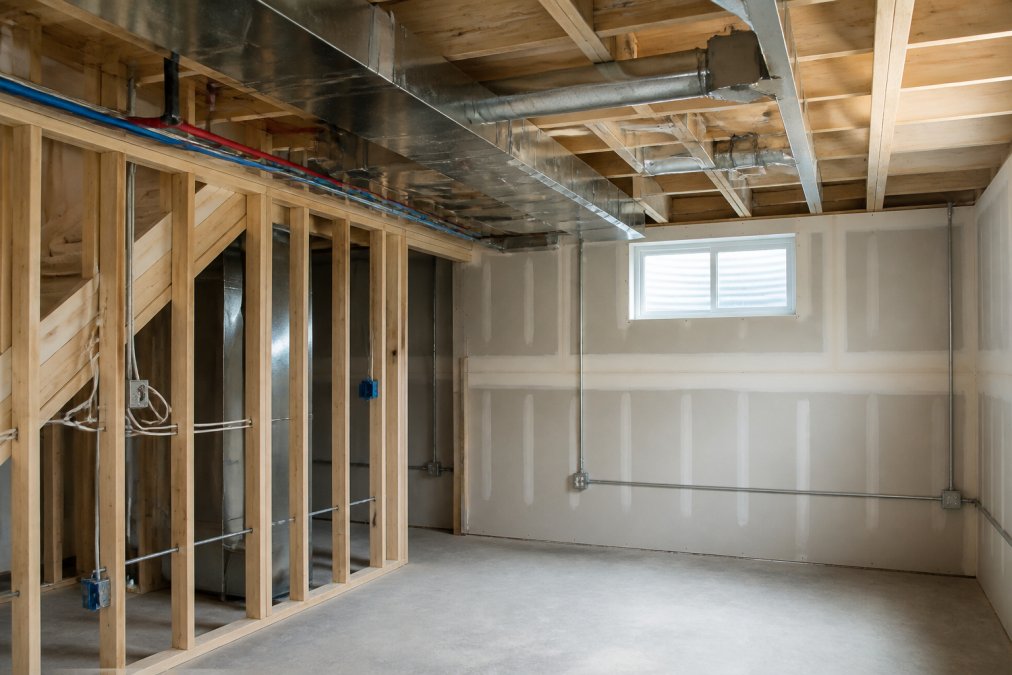
Full-Service Basement Remodeling
Full-service basement contractors handle the complete renovation process from design through final finishing. They manage structural modifications, waterproofing, mechanical systems integration, framing, electrical work, plumbing additions, drywall installation, flooring, and finishes. They also handle permitting and coordinate inspections.
A full-service contractor is ideal if you want a single point of contact who takes responsibility for the entire project. The advantage of full-service contractors is accountability. One company is responsible for the entire result.
Waterproofing and Moisture Control Specialists
Some contractors specialize exclusively in basement waterproofing and moisture control. These specialists understand the science of water intrusion, soil conditions, drainage patterns, and moisture management. They offer services like interior waterproofing membranes, exterior waterproofing systems, sump pump installation, French drain systems, and crack injection.
Moisture control specialists are valuable if your primary concern is addressing existing water problems before or during a renovation. If your basement has a history of moisture problems, consulting a waterproofing specialist before starting a full renovation is often wise.
Foundation Repair and Stabilization
Foundation repair contractors specialize in addressing structural issues like cracked foundations, settling, bowing walls, or inadequate support. These services are distinct from waterproofing, though moisture problems and foundation issues often occur together.
Foundation repair specialists use techniques like carbon fiber reinforcement, helical piers, or wall anchors to stabilize and repair foundations. They’re essential if your basement has structural concerns that must be addressed before finishing work can safely proceed.
DIY vs. Professional Basement Finishing
Some homeowners consider finishing their basements themselves to save money. DIY basement finishing works best for cosmetic improvements like painting, basic flooring installation, or simple shelving.
DIY becomes problematic when the project involves mechanical systems, structural modifications, or code-regulated work. Running electrical circuits requires understanding electrical codes and often requires a licensed electrician. Plumbing additions must meet code requirements and be inspected. Structural modifications like adding egress windows require engineering and permits.
Many homeowners underestimate the complexity and time required for basement finishing. The biggest risk of DIY basement finishing is code violations. If you finish your basement without permits or fail to meet building codes, you create liability for yourself. Professional contractors bring expertise, proper tools, and accountability. For complex projects involving mechanical systems or structural modifications, professional work is the safer choice.
Building Code Compliance and Permits
Building codes exist to ensure that finished basements are safe, structurally sound, and properly integrated with your home’s mechanical systems. Most jurisdictions require permits for basement finishing work. Permitted work is inspected at multiple stages to ensure compliance.
Key code requirements typically include egress windows for bedrooms, adequate ceiling height (usually 7 feet 6 inches minimum), proper ventilation, electrical outlets at required spacing, and adequate lighting (iccsafe.org). Structural modifications require engineering and inspection. Waterproofing and moisture control are often code requirements in basements below grade.
Ask potential contractors whether they’re familiar with your local building codes and whether they handle permitting. A contractor who’s completed multiple projects in your area understands the specific requirements your jurisdiction enforces.
Choosing the right basement contractor is one of the most important decisions in your home renovation process. The contractor you select will spend weeks in your home, manage complex mechanical and structural work, and create a space you’ll live with for years.
Berry Basements has helped Grand Rapids homeowners transform underutilized basements into custom living spaces since 2017. We handle the complete process, from collaborative design through structural modifications, waterproofing, mechanical integration, and finishing work. Our commitment to quality without cutting corners and transparent communication throughout the project ensures you know what to expect at every stage. Get a free estimate from Berry Basements and see how we approach basement finishing differently.
=== FAQ ANSWERS (audit these too, same rules) ===
[1] Q: What should I look for when hiring a basement finishing contractor?
A: Prioritize licensed and insured contractors with verifiable local experience. Request references from recent basement finishing projects, check their Michigan contractor license status, and ask about their approach to building permits and code compliance. Review their portfolio for quality of work on similar projects. A reputable contractor should provide a detailed written estimate, explain their timeline clearly, and show willingness to address your specific needs through a collaborative process.
[2] Q: How do I verify a contractor’s license and insurance in Michigan?
A: Contact the Michigan Department of Licensing and Regulatory Affairs (LARA) to verify a contractor’s license status. Ask the contractor directly for proof of general liability insurance and workers’ compensation coverage, and request they provide contact information for their insurance provider so you can confirm active policies. Licensed contractors should carry minimum coverage limits as required by Michigan law. Never hire someone who cannot provide current insurance documentation.
[3] Q: What factors affect basement remodeling cost estimates?
A: Costs depend on scope of work (framing, electrical, plumbing, HVAC integration), square footage, materials selected, structural modifications needed, moisture remediation, permit requirements, and local labor rates. Finished basements typically require investment in insulation, drywall, flooring, lighting, and climate control. Waterproofing or foundation work adds significant cost. Request itemized estimates from multiple contractors to understand pricing variations and identify where costs concentrate in your specific project.
[4] Q: How long does a typical basement renovation take?
A: Most basement renovation projects take 6 to 12 weeks, depending on complexity and scope. Simple finishing work may complete in 4 to 6 weeks, while projects involving structural changes, plumbing rough-in, HVAC integration, or waterproofing can extend 12 to 16 weeks or longer. Timeline depends on permit approval delays, material availability, and any unexpected structural issues discovered during demolition. A professional contractor should provide a detailed project timeline and explain factors that could cause delays.
[5] Q: Should I hire a professional or attempt basement finishing myself?
A: Professional basement finishing is recommended for most homeowners because it involves complex systems: electrical wiring, plumbing, HVAC ductwork concealment, building code compliance, and moisture control. Mistakes in these areas create safety hazards, code violations, and costly repairs. Professionals manage permits, inspections, and structural modifications safely. DIY work may void permits or insurance coverage. Consider professional services for the full project or at least for electrical, plumbing, and structural work, then handle simpler finishing tasks yourself if desired.
Frequently Asked Questions
What should I look for when hiring a basement finishing contractor?
Prioritize licensed and insured contractors with verifiable local experience. Request references from recent basement finishing projects, check their Michigan contractor license status, and ask about their approach to building permits and code compliance. Review their portfolio for quality of work on similar projects. A reputable contractor should provide a detailed written estimate, explain their timeline clearly, and show willingness to address your specific needs through a collaborative process.
How do I verify a contractor's license and insurance in Michigan?
Contact the Michigan Department of Licensing and Regulatory Affairs (LARA) to verify a contractor's license status. Ask the contractor directly for proof of general liability insurance and workers' compensation coverage, and request they provide contact information for their insurance provider so you can confirm active policies. Licensed contractors should carry minimum coverage limits as required by Michigan law. Never hire someone who cannot provide current insurance documentation.
What factors affect basement remodeling cost estimates?
Costs depend on scope of work (framing, electrical, plumbing, HVAC integration), square footage, materials selected, structural modifications needed, moisture remediation, permit requirements, and local labor rates. Finished basements typically require investment in insulation, drywall, flooring, lighting, and climate control. Waterproofing or foundation work adds significant cost. Request itemized estimates from multiple contractors to understand pricing variations and identify where costs concentrate in your specific project.
How long does a typical basement renovation take?
Most basement renovation projects take 6 to 12 weeks, depending on complexity and scope. Simple finishing work may complete in 4 to 6 weeks, while projects involving structural changes, plumbing rough-in, HVAC integration, or waterproofing can extend 12 to 16 weeks or longer. Timeline depends on permit approval delays, material availability, and any unexpected structural issues discovered during demolition. A professional contractor should provide a detailed project timeline and explain factors that could cause delays.
Should I hire a professional or attempt basement finishing myself?
Professional basement finishing is recommended for most homeowners because it involves complex systems: electrical wiring, plumbing, HVAC ductwork concealment, building code compliance, and moisture control. Mistakes in these areas create safety hazards, code violations, and costly repairs. Professionals manage permits, inspections, and structural modifications safely. DIY work may void permits or insurance coverage. Consider professional services for the full project or at least for electrical, plumbing, and structural work, then handle simpler finishing tasks yourself if desired.
This article was written using GrandRanker