

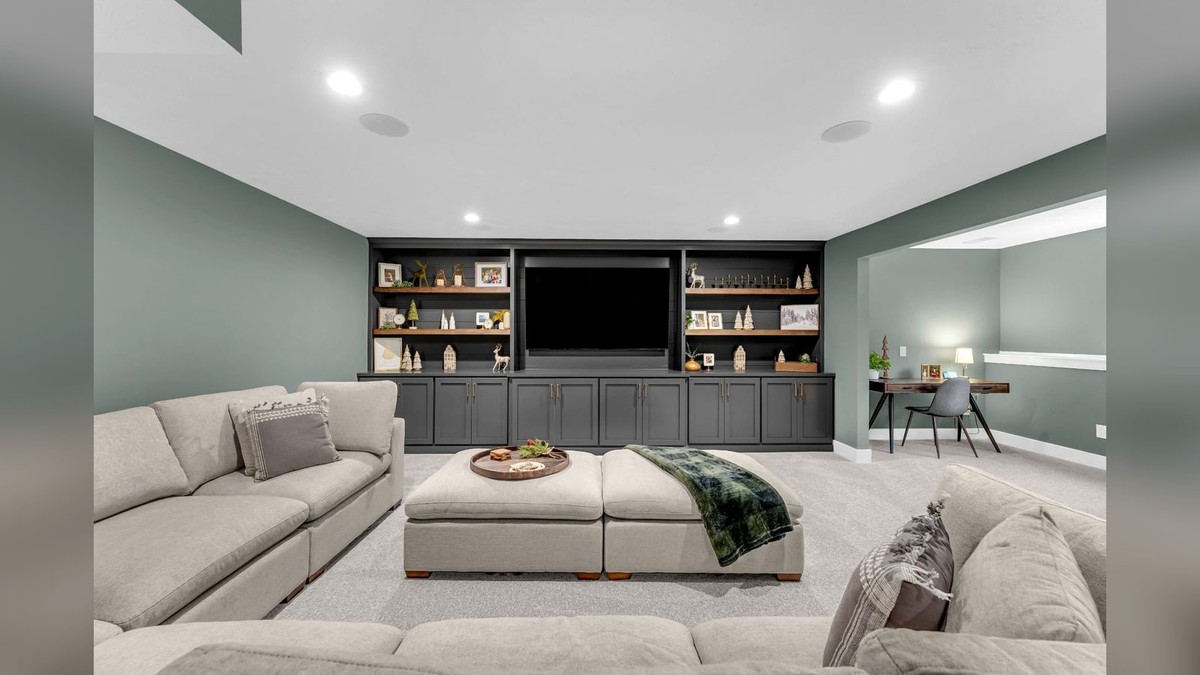
You keep a finished basement warm by stopping cold air first, then moving heat where people actually sit. A new space heater rarely fixes a room that leaks at the rim joist or starves for supply air.
Our basement contractors in Jenison, MI hear the same January complaint every year: the room looks great but feels like a cellar.
Here's how to make the lower level comfortable all season.
Why the Lower Level Runs Cold in January
Below grade, the soil around your foundation holds a steady chill all winter. Cold air also sinks, so drafts from upstairs and outside collect at the lowest point in the house.
A thermostat on the main floor usually shuts the furnace off before the basement catches up. The result is a room that feels noticeably cooler than the kitchen.
Seal the Rim Joist Before Buying Heat
The band of framing where the house sits on the foundation is the leakiest spot in most Michigan basements. ENERGY STAR advises homeowners to at the top and bottom, plus the sill plate and pipe or wire openings.
Caulk handles gaps up to about 1/4 inch, and spray foam fills larger ones. Our step-by-step guide on sealing basement wall gaps covers each spot in detail.
Check Supply and Return Airflow
A finished room needs warm air coming in and a path for cool air to leave. Without a return, supply registers push against a closed room and deliver little heat.
Walk the space with the furnace running and feel each register. Weak airflow, or rooms that never match the thermostat, are classic signs of an HVAC problem worth a closer look.
Warm the Floor Under Your Feet
Concrete pulls heat from bare feet, even when the air temperature is fine. A subfloor system, carpet with a quality pad, or electric radiant mats under tile all put a layer between you and the slab.
Moisture still matters below the finish surface. Our guide to flooring for damp basements compares the safest options.
Add a Dedicated Heat Source if Needed
Some basements stay cold after sealing and balancing. That is when added heat makes sense.
A ductless mini-split is one option for rooms without good ductwork. ENERGY STAR certifies for heating performance tested down to 5°F.
Electric baseboard or a gas fireplace can also work in a single room. Each choice changes wiring, venting, or permits, so plan it during the remodel rather than after.
Keep Winter Comfort and Costs in Balance
ENERGY STAR estimates that can trim up to 10% from annual energy bills. That is why sealing comes before new equipment.
A warm basement also stays drier. Cold walls and windows collect condensation, so heat and air sealing work together.
Frequently Asked Questions
Is a space heater safe to use in a finished basement?
A space heater can be used safely for short periods when you follow basic fire rules. Keep beds, curtains, and anything else that burns at least 3 feet away, and turn it off when you leave the room or go to sleep.
The lists both rules in its heating safety tips. A space heater is a stopgap, not a fix for drafts.
What humidity level should a basement have in winter?
Aim to keep basement humidity below 60 percent, and ideally between 30 and 50 percent. An inexpensive humidity meter tells you where the room sits.
The notes that condensation can be a sign of high humidity. Water beading on windows or pipes in January means it is time to dry the air and cover cold surfaces.
Will a mini-split keep working on the coldest Michigan nights?
Yes, a certified cold climate unit keeps running on the coldest nights, though its output drops as temperatures fall. For the rare subzero stretch, a back-up heat source is a smart plan.
recommends back-up heat for the coldest temperatures. Ask your installer how the unit is sized for your space.
Can Berry Basements add ductwork during a basement remodel?
Yes. Installing ductwork for HVAC is part of the remodeling work Berry Basements handles, along with framing walls and waterproofing.
On a basement remodeling or finishing project, the team can also close in existing ductwork so it blends with the room. Planning heat before drywall keeps registers clear of furniture.
What happens at a Berry Basements estimate for a cold basement?
The estimate is free and takes about 45 minutes. Berry Basements reviews your blueprints and talks through layout changes before pricing anything.
You then receive a written proposal with accurate pricing, plus 2D and 3D renderings of the finished space. Bring notes on which rooms feel coldest so heating can be part of the plan from the start.
Plan a Warmer Basement With Berry Basements
A cold lower level is usually a fixable list of leaks, airflow gaps, and floor choices. Building basements since 2017, our Jenison, MI basement contractors plan heat and comfort into every finished space.
Call Berry Basements today at (616) 250-9171 or request a free estimate online.