

Table of Contents
- Why Basement Construction Insurance Matters
- Dwelling Coverage and Replacement Cost Protection
- Builder’s Risk Insurance for Homeowners
- Contractor Liability Insurance Verification
- Water Damage, Sewer Backup, and Structural Protection
- How to Update Homeowners Insurance After Basement Remodel
- Insurance-Compliant Renovations and Property Value ROI
- Documentation Checklist for Insurance Claims
- Frequently Asked Questions
Last Updated: September 3, 2026
Why Basement Construction Insurance Matters
Basement renovations involve structural modifications, waterproofing, electrical upgrades, HVAC integration, and often foundation work, each introducing significant risk. Without proper insurance coverage, you’re personally liable for thousands of dollars in damages if a contractor abandons the job, water intrusion emerges months later, or a subcontractor’s negligence causes injury on your property.
The real issue is understanding which types of coverage apply at which stages, how to verify that contractors carry the right policies, and how to update your homeowners policy once work is complete. Many homeowners discover these gaps only after a problem arises, when it’s too late to fix them.
Dwelling Coverage and Replacement Cost Protection
Dwelling coverage protects your home’s structure, walls, roof, floors, built-in appliances, and permanent fixtures. When you finish a basement, that space becomes part of your home’s insurable value. Most standard homeowners policies set a dwelling coverage limit based on your home’s estimated replacement cost at the time the policy was issued. A professional basement renovation can add 10-20% to your home’s total square footage and value.
The critical mistake: your insurance company won’t automatically increase your dwelling coverage just because you’ve added square footage. If you don’t request a policy review and adjustment, you’ll be underinsured. If your home suffers a total loss, your insurance payout won’t cover the full cost to rebuild, including the newly finished basement.
After your basement renovation is complete, contact your insurance agent with photos, contractor invoices, and a description of the work performed. Request a formal reassessment of your home’s replacement cost. Your agent will order an updated home valuation, and your dwelling coverage limit will be adjusted upward. Yes, your premium will increase proportionally, but you’ll actually be protected.
Builder’s Risk Insurance for Homeowners
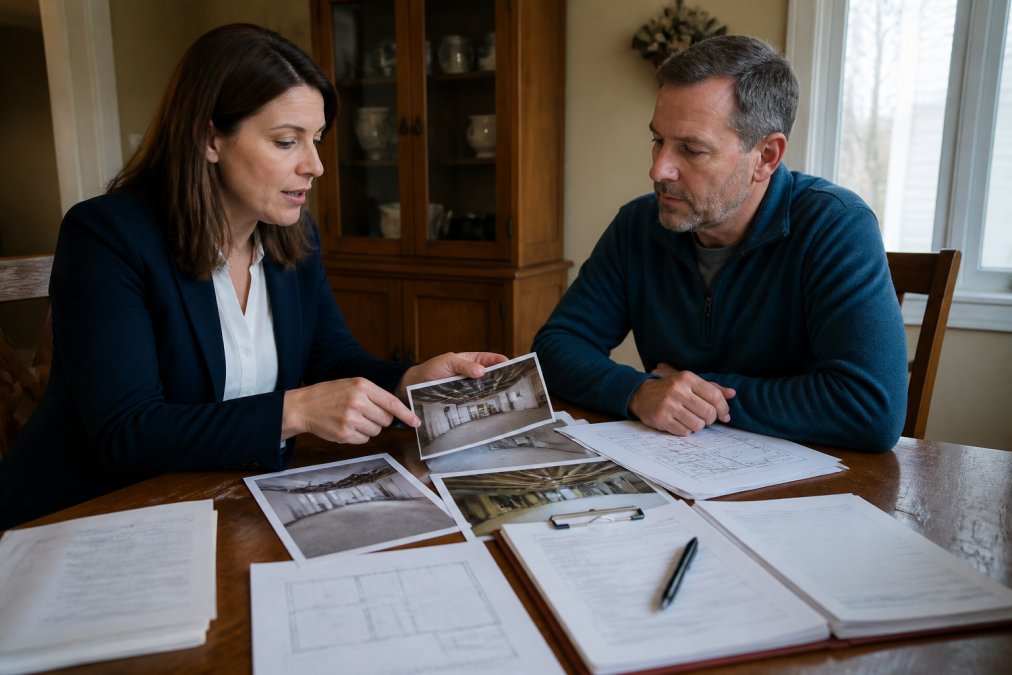
Builder’s risk insurance is temporary coverage that protects your home during active construction or renovation. While work is in progress, your basement becomes an open construction site with exposed electrical systems, rerouted plumbing, and potentially partial foundation excavation. Your standard homeowners policy has gaps during this phase.
Builder’s risk insurance covers structural damage caused by weather, fire, theft, or vandalism during construction, plus materials stored on-site. If copper wiring or lumber is stolen from your basement while work is underway, builder’s risk covers the replacement cost.
Most reputable contractors carry their own builder’s risk insurance as part of their standard project setup. However, verify this before signing a contract. Ask your contractor for a certificate of insurance showing the policy number, coverage limits, and the contractor’s name as the insured party. Don’t assume it’s in place. The cost is typically modest, often a few hundred dollars for a basement renovation project, and it’s worth the protection.
Contractor Liability Insurance Verification
A contractor’s liability policy protects you if the contractor or their employees cause bodily injury or property damage while working on your project. Without it, you could be sued for a subcontractor’s medical bills or for accidental damage like a punctured water line.
The standard minimum for contractor liability is $1 million per occurrence. Ask your contractor for:
- A current Certificate of Insurance showing general liability coverage
- The contractor’s name as the “insured”
- Coverage limits of at least $1 million per occurrence
- A note that the policy is “primary” coverage
- Proof that the policy is active for the duration of your project
Don’t accept verbal assurances. A legitimate, professional contractor will have no problem providing documentation. If they hesitate or can’t produce a current certificate, that’s a red flag.
Water Damage, Sewer Backup, and Structural Protection
Basements sit below grade, making them inherently vulnerable to water. Your standard homeowners policy excludes most water damage, specifically damage caused by poor drainage, groundwater seepage, or sewer backup, the exact problems that plague basements.
The solution is a separate water backup endorsement. This rider adds coverage for damage caused by sewer or drain backup, typically covering cleanup costs, structural damage, and replacement of damaged materials. The cost is modest, usually $50-150 per year, and it’s essential for any finished basement.
However, insurance can only pay for damage after the fact. Real protection comes from proper waterproofing before you finish the space. A quality waterproofing system, including exterior or interior drainage, sump pump installation, and vapor barriers, prevents water damage from occurring in the first place.
Additionally, finished basements add weight and structural stress to your foundation. A structural engineer should assess your foundation before major renovation work begins. This assessment establishes the baseline condition of the structure and protects you if issues arise later.
How to Update Homeowners Insurance After Basement Remodel
Once your basement renovation is complete, you must update your homeowners insurance. Failing to update your policy could void coverage or result in claim denial if damage occurs.
Notify your insurance agent that the renovation is complete and provide documentation: photos of the finished space, copies of contractor invoices, a description of the work performed, and building permits if applicable. Your agent will request an updated home valuation. The underwriting team will assess how the renovation affects your home’s replacement cost and calculate a new dwelling coverage limit, typically resulting in a 5-15% increase in your annual premium (iii.org).
If you don’t update your coverage and something happens, you’ll be underinsured. An insurance claim on an underinsured property results in a penalty called “coinsurance.” If your home’s actual replacement cost is $450,000 but your dwelling coverage limit is only $350,000, your insurer will reduce claim payouts proportionally (naic.org).
Update your policy within 30 days of project completion. Don’t delay. Many homeowners procrastinate, then face complications when damage occurs on an outdated policy.
Insurance-Compliant Renovations and Property Value ROI
A basement renovation that meets building codes and insurance standards delivers better ROI than one that doesn’t. When a basement is finished to code with proper electrical systems, HVAC integration, structural support, waterproofing, and egress windows, it adds genuine value. Appraisers recognize code-compliant work and factor it into home valuation.
Conversely, unpermitted electrical work, inadequate waterproofing, or missing egress windows creates liability and may not be insurable or may require higher premiums. When you sell, buyers will demand price reductions or walk away if they discover unpermitted work.
A basement renovation that adds to your home’s appraised value, costs more annually in insurance, and is fully insurable and code-compliant is a sound investment. Keep all permits, inspections, contractor invoices, and insurance updates. When you sell, this paper trail proves the work was done properly and justifies the asking price.
Documentation Checklist for Insurance Claims
If water damage, structural issues, or contractor-related problems occur after your basement renovation, you’ll need documentation to file an insurance claim. Create a project file and keep these documents:
- Building Permits and Inspections: Copies of all permits and final inspection sign-offs
- Contractor Information: License number, contact information, and proof of insurance
- Invoices and Receipts: Itemized invoices showing what work was performed and what was paid
- Project Photos: Before, during, and after photos establishing the condition and completion
- Warranty Documentation: Any warranties provided by the contractor or material manufacturers
- Insurance Policy Updates: Copies of your updated homeowners insurance policy
- Structural or Engineering Reports: Any baseline assessments of your foundation
- Permits and Compliance Records: Correspondence with your local building department
If a problem occurs, contact your insurance agent immediately with this documentation. Get written estimates from contractors before proceeding with repairs. Don’t make repairs without approval from your adjuster, or you may not be reimbursed.
A finished basement is a significant investment in your home’s functionality and value. Understanding basement construction insurance, what it covers, what it doesn’t, and how to maintain proper coverage protects that investment. The process requires attention to detail: verifying contractor insurance, updating your homeowners policy, maintaining documentation, and choosing a contractor who prioritizes code compliance and quality.
At Berry Basements, we handle the construction side of this equation. We pull the necessary permits, carry the required insurance, and build to code so your finished basement is insurable, valuable, and built to last. When you’re ready to explore what a professionally finished basement can do for your home, reach out for a free estimate and let’s discuss how we can transform your space.
Frequently Asked Questions
Q: Does my homeowners insurance cover basement construction projects?
A: Standard homeowners insurance typically does not cover active construction work. You’ll need builder’s risk insurance during the renovation phase. Once the basement construction is complete and the space is finished, your homeowners policy will cover the new dwelling coverage for the added square footage. Notify your insurance company before starting work so they can clarify what’s covered during and after construction.
Q: Is a finished basement more expensive to insure?
A: Yes, a finished basement increases your replacement cost value, which can raise your premiums. However, the increase is typically modest compared to the property value gain. A properly finished basement with professional waterproofing and structural work may actually reduce your risk profile, potentially offsetting some premium increases. Request a quote after renovation to see the exact impact on your policy.
Q: What is the difference between builder’s risk insurance and standard homeowners insurance?
A: Builder’s risk insurance protects your home and materials during active construction, covering theft, weather damage, and accidents on the job site. Standard homeowners insurance covers your completed home and personal property. Builder’s risk is temporary and ends when construction finishes. After that, your homeowners policy takes over with updated dwelling coverage reflecting the finished basement’s added value.
Q: What happens if a contractor is injured during my basement remodel?
A: This is why contractor liability insurance verification is critical. A licensed contractor carries workers’ compensation and professional indemnity insurance to cover on-site injuries. Before hiring, request proof of active coverage and verify their license with local authorities. If a contractor lacks proper insurance and is injured, you could face personal liability claims. Always confirm insurance details in writing before work begins.
This article was written using GrandRanker