

Table of Contents
- BasementTrust vs Matrix Basements: Quick Overview
- How to Choose a Basement Contractor: What Matters Most
- Installation Speed, Timeline, and Project Management
- Material Quality, Durability, and Craftsmanship
- Questions to Ask Basement Contractors Before Hiring
- Average Cost of Basement Finishing and Budget Realities
- Moisture Mitigation, Waterproofing, and Long-Term Value
- Which Contractor Should You Choose?
- Frequently Asked Questions
Last Updated: September 2, 2026
BasementTrust vs Matrix Basements: Quick Overview
Choosing between BasementTrust and Matrix Basements means understanding what actually separates them: timeline reliability, material quality, craftsmanship standards, moisture mitigation expertise, and project management approach. This comparison moves past marketing claims into the real operational differences that determine whether your basement project succeeds or creates costly problems years later.
How to Choose a Basement Contractor: What Matters Most
A basement remodeling project involves waterproofing, structural considerations, HVAC routing, plumbing integration, and electrical work happening simultaneously in a confined space. The contractor you choose determines whether those systems work together or create problems.
The five most important evaluation criteria are: timeline predictability, material quality and durability, craftsmanship and attention to detail, moisture mitigation expertise, and communication and project management. You should also assess how each contractor handles customization, whether they offer standardized packages or collaborative design that matches your specific vision.
Installation Speed, Timeline, and Project Management
Basement finishing typically takes 6 to 12 weeks depending on scope. BasementTrust assigns a dedicated project manager to each job, provides weekly updates, and maintains clear schedules. Projects generally stay on track, though structural issues or moisture problems can extend timelines with early communication.
Matrix Basements emphasizes efficiency by running parallel phases, electrical and HVAC work simultaneously rather than sequentially. This can compress timelines but requires precise coordination. The real difference emerges when problems surface: a contractor who slows down to fix issues properly protects your long-term investment, while one who pushes forward to maintain schedule creates technical debt that becomes your problem later.
Both contractors maintain reasonable site standards, though they differ in how they prioritize your household rhythm versus their scheduling efficiency.
Material Quality, Durability, and Craftsmanship
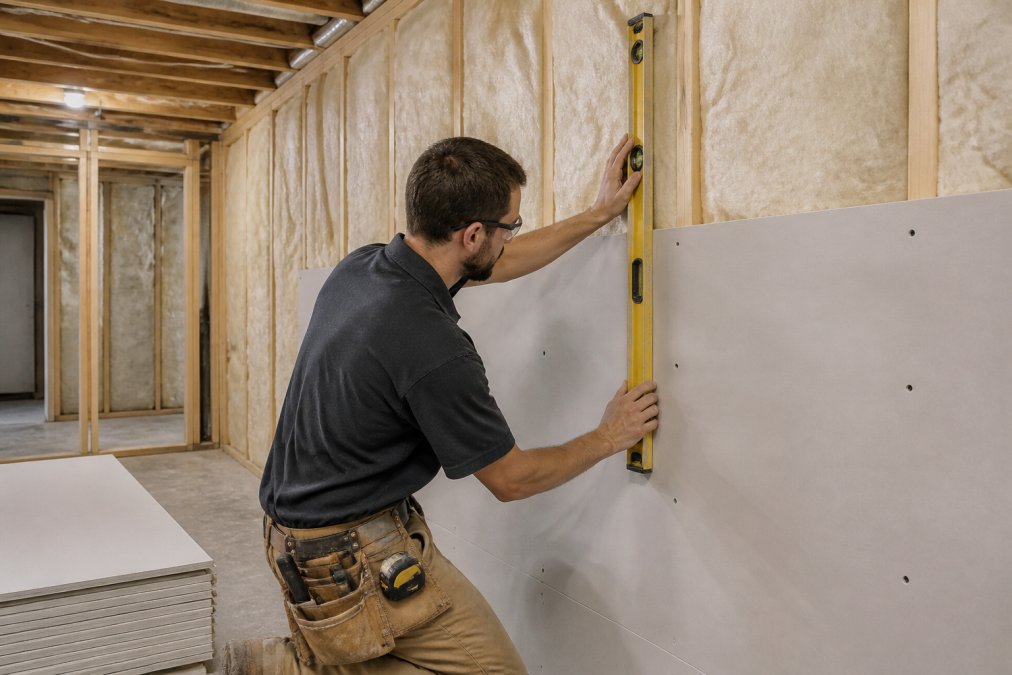
BasementTrust sources mid-to-premium grade materials, using moisture-resistant drywall throughout and offering insulation choices like closed-cell foam or fiberglass with vapor barriers. Homeowners consistently report clean, professional finishes with tight seams and proper taping.
Matrix Basements offers a broader range of material grades. Their standard packages use builder-grade materials that meet code, while premium packages match BasementTrust’s quality. The difference is presentation: Matrix often leads with cost-conscious options, while BasementTrust starts with quality and works backward to budget.
Craftsmanship shows most clearly in tight drywall seams, properly sealed outlets, and clean paint lines. Both contractors maintain acceptable standards, but BasementTrust’s collaborative process involves you in quality checkpoints throughout. For durability, materials that resist moisture and handle temperature swings serve 20+ years, while cost-driven choices require replacement within 10 years (peer-reviewed research).
Questions to Ask Basement Contractors Before Hiring
Before committing, ask each contractor:
On Timeline and Scheduling: “What’s your typical timeline for a project like mine, and what factors could extend it?”
On Moisture and Waterproofing: “How do you assess existing moisture conditions, and what waterproofing approach do you recommend?”
On Customization and Design: “Do you offer collaborative design, or do I choose from preset packages?”
On Project Management: “Who will be my primary contact, and how often will I receive updates?”
On Materials and Upgrades: “What’s included in your standard package, and what are upgrade costs?”
On Warranty and Guarantees: “What’s covered under warranty, and for how long?”
On References and Portfolio: “Can you provide references from similar projects and photos of finished basements?”
On Crew and Subcontractors: “Will the same crew work throughout, or does that change?”
A contractor’s willingness to answer thoroughly and specifically indicates confidence in their process. Vague responses are a red flag.
Average Cost of Basement Finishing and Budget Realities
Typical Cost Ranges by Project Scope
A basic finish with drywall, paint, and concrete or vinyl flooring costs $25 to $50 per square foot (nahb.org). For 1,000 square feet, that’s $25,000 to $50,000.
Mid-range finishes with upgraded materials run $50 to $75 per square foot ($50,000 to $75,000 for 1,000 square feet).
Premium finishes with high-end materials and custom features exceed $100 per square foot ($100,000+ for 1,000 square feet).
These assume standard conditions with no active moisture problems or structural issues. Projects with complications cost significantly more.
What’s Included vs. What Costs Extra
A typical quote should include framing, insulation, drywall finishing, paint, basic electrical work, HVAC integration, and flooring installation. It should specify material grades clearly.
Common line items that vary: waterproofing and moisture barriers ($1,500-$3,000 interior; much higher for exterior), flooring material ($500-$8,000 depending on type), electrical upgrades, HVAC modifications, custom features, and plumbing work.
Line-item quotes let you understand where money goes and make informed decisions. Lump-sum quotes are harder to evaluate.
Change Orders and Hidden Costs
Change orders, modifications to original scope, are where budgets blow up. Common sources include structural repairs, moisture remediation, system complications, material upgrades, and unforeseen conditions like asbestos or mold.
A thorough pre-project assessment identifying potential complications minimizes surprise change orders. BasementTrust typically includes this; Matrix Basements may recommend it as an add-on.
When a change order is proposed, ask for detailed explanation of why it’s necessary, what it includes, and its cost. A contractor who can’t explain clearly is either uncertain or inflating costs.
Comparing Quotes: What to Look For
Don’t compare total price alone. Compare scope, material grades, and what’s included. Two quotes might differ significantly in quality while appearing similar in cost.
Also compare warranty and post-project support. A contractor warranting their work for 1-2 years stands behind quality. One offering no warranty shifts risk to you.
Budget Strategy: Invest in Quality Where It Matters
Invest in quality on waterproofing and moisture control (determines usability), insulation and vapor barriers (affect long-term comfort and moisture performance), and moisture-resistant drywall (lasts significantly longer in basement conditions).
Minimize cost on paint color, flooring in non-primary areas, and basic electrical fixtures, these are inexpensive to change later.
A contractor helping you make intelligent trade-offs rather than pushing maximum or minimum cost is worth the investment.
Timeline and Cost Relationship
Faster timelines sometimes cost more. A contractor compressing a 10-week project into 6 weeks may charge a premium. Understand this relationship in your quote. Your budget should reflect the quality and timeline you actually want, not the minimum you can negotiate.
Moisture Mitigation, Waterproofing, and Long-Term Value
Moisture is the silent killer of basement projects. A finished basement developing moisture problems becomes unusable and creates health risks. This is where contractor expertise determines whether your investment holds up or fails within five years.
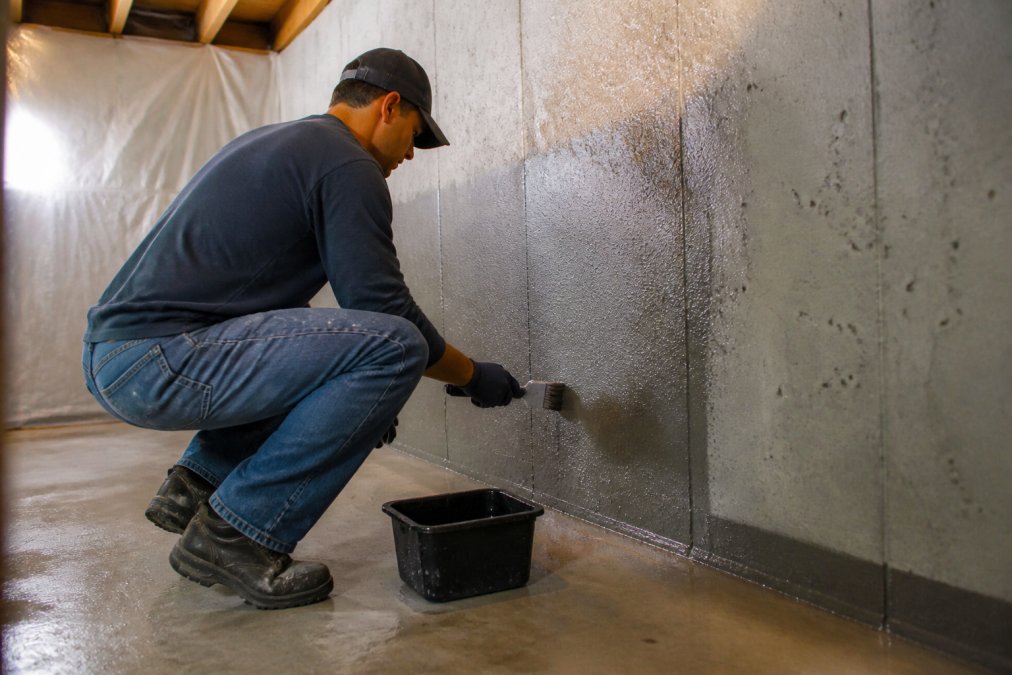
Understanding Waterproofing Systems: Interior vs. Exterior
Interior waterproofing applies a moisture barrier to the inside of foundation walls before finishing. It’s faster, less disruptive, and costs $1,500 to $3,000, but doesn’t stop water from entering the foundation, only prevents it from migrating into your finished space. It works well for minor moisture issues or good drainage areas.
Exterior waterproofing excavates soil around the foundation, applies a waterproof membrane to the outside, and installs perimeter drainage. It stops water before reaching the foundation, the gold standard. Cost is $8,000 to $15,000+ but solves the problem at the source and protects the foundation structure. It’s essential for active water intrusion, high water tables, or poor drainage.
Hybrid approaches combine interior barriers with targeted exterior work, balancing cost and protection.
Vapor Barriers and Slab Moisture
Water rises from concrete slabs through capillary action. A proper vapor barrier under flooring prevents this. The standard is 6-mil polyethylene; some contractors use thicker barriers or specialized products. A quality barrier properly sealed at seams prevents moisture from damaging flooring and creating mold.
BasementTrust conducts moisture assessment before finishing, identifying slab and wall moisture sources and specifying appropriate barriers. Matrix Basements includes standard vapor barrier but is less likely to diagnose specific moisture sources upfront.
Ventilation and Humidity Control
Basements naturally accumulate humidity. Proper ventilation combines exhaust fans, supply air, and dehumidifiers. A contractor designing ventilation as part of finishing, routing HVAC returns to the basement and installing exhaust fans, prevents humidity problems. One treating ventilation as an afterthought leaves you managing moisture with a standalone dehumidifier.
BasementTrust typically includes ventilation design. Matrix Basements may recommend it as an upgrade.
Long-Term Performance and Resale Impact
Interior waterproofing alone may require reapplication if moisture issues worsen. Exterior waterproofing typically lasts 20+ years with minimal maintenance.
Resale value is significantly affected. Evidence of moisture history, staining, efflorescence, or mold, reduces buyer confidence and offer price by $10,000 to $30,000 or more (the CDC). A basement with proper waterproofing shows no moisture signs and commands full value.
Investing in comprehensive waterproofing protects both your enjoyment and your home’s market value.
Which Contractor Should You Choose?
BasementTrust is the stronger choice if you prioritize quality, collaborative design, and long-term durability. They excel at understanding your vision, managing complex projects, and ensuring moisture protection is built in from the start. They’re best for homeowners wanting customization and willing to invest in quality.
Matrix Basements makes sense if you need faster turnaround and are comfortable with standardized packages. They’re efficient and deliver results quickly. They’re best for straightforward projects with clear scope and budget constraints.
The best choice depends on your specific needs, budget, timeline, and customization requirements. A basic finished basement? Either contractor works. A complex project with custom features or moisture concerns? You need deep expertise and collaborative process.
At Berry Basements, we prioritize a collaborative approach where your vision drives design, our craftsmanship executes it, and our expertise manages the complexity you don’t see, moisture mitigation, structural considerations, system integration. We’ve served the local community since 2017, building our reputation on delivering what we promise without cutting corners.
The most important step is requesting detailed quotes from multiple contractors and asking the questions outlined above. The contractor who listens carefully, asks clarifying questions, and provides specific answers is worth hiring.
Frequently Asked Questions
What questions should I ask a basement contractor before hiring?
Ask about their licensing, insurance, and how long they’ve been in business. Request references from recent projects and photos of finished work. Clarify the timeline, payment schedule, and warranty coverage. Ask how they handle unexpected structural issues, moisture problems, and site cleanliness during the project. Get everything in writing, including materials, labor costs, and what’s included in the final price. Ask about their experience with your specific needs, whether that’s a home theater, extra bedroom, or gym space.
How much does basement finishing typically cost?
Basement finishing costs depend on square footage, materials chosen, complexity of structural work, and whether waterproofing or HVAC modifications are needed. Pricing varies significantly by region and contractor. For an accurate estimate tailored to your space and customization needs, request a quote from licensed contractors in your area who can assess your specific basement conditions and goals.
What makes a basement contractor reliable and trustworthy?
A reliable contractor maintains consistent communication, provides clear written estimates and timelines, holds proper licensing and insurance, and has verifiable references from past clients. They should explain their process transparently, address concerns about moisture and structural integrity upfront, and stand behind their workmanship with warranty coverage. Check online reviews, ask for before-and-after photos from similar projects, and verify their credentials with local licensing boards. Trustworthy contractors don’t disappear mid-project and manage subcontractors professionally.
How does waterproofing and moisture prevention affect basement renovation value?
Proper waterproofing and moisture mitigation are critical for long-term value and prevent mold, structural damage, and costly repairs down the road. A basement with unresolved moisture issues will fail home inspections, deter buyers, and undermine resale value. Professional contractors address moisture as part of the renovation, not separately. Quality waterproofing protects your investment, keeps the finished space usable for years, and increases home appraisal value. This is one area where cutting corners causes expensive problems later.
Ready to move forward with confidence? Contact Berry Basements for a free estimate. We’ll assess your space, understand your vision, and provide a clear plan for transforming your basement into the living space your family deserves. Our licensed team has managed everything from simple finished basements to complex home theaters and entertainment areas. Let’s build something that lasts.
This article was written using GrandRanker