

Table of Contents
- Why Homeowners Look Beyond BasementTrust
- Key Questions to Ask Basement Finishing Contractors
- Comparing Basement Finishing Contractors: What Sets Them Apart
- Understanding Basement Remodeling Project Timeline
- Best Practices for Basement Moisture Control During Renovation
- Evaluating Your Budget and Getting Accurate Quotes
- Choosing the Right Basement Finishing Contractor for Your Needs
- Conclusion
Last Updated: August 17, 2026
Why Homeowners Look Beyond BasementTrust
When homeowners search for basement finishing contractors, many start with well-known names like BasementTrust. But a single contractor rarely fits every project, budget, or communication style. The decision to look beyond one option isn’t about dissatisfaction, it’s about finding the right fit for your specific situation.
Basement remodeling is one of the most complex home projects you’ll undertake. It involves structural considerations, moisture control, building codes, permits, HVAC integration, and often plumbing work. The contractor you choose shapes everything from your timeline and final cost to the quality of materials and long-term durability of your finished space.
At Berry Basements, we’ve worked with homeowners who initially considered other contractors before choosing a different path. The most common reasons they looked elsewhere: communication style mismatches, project management concerns, unclear pricing structures, or a desire to work with contractors who prioritize their specific needs, whether that’s a custom home theater, a gym, or an extra bedroom. This guide walks you through what to evaluate when comparing basement finishing contractors, so you can make an informed choice that matches your vision and budget.
Before comparing contractors, clarify what “basement finishing” means for your project. Are you adding living space, addressing moisture issues, or both? A contractor strong in structural renovation might excel differently than one focused on interior design. Know your priorities first.
Key Questions to Ask Basement Finishing Contractors
The right questions reveal how a contractor thinks, communicates, and manages risk. These aren’t casual conversation starters, they’re diagnostic tools that separate contractors who understand complexity from those who gloss over it.
Ask about their experience with your specific project type. If you’re building a home theater, ask how many they’ve completed. What challenges did they encounter? How did they solve them? A contractor experienced with entertainment spaces understands acoustic requirements, electrical loads for multiple screens and sound systems, and ventilation needs that differ from a simple bedroom renovation.
Inquire about their approach to basement moisture control. This is non-negotiable. Ask: "How do you assess moisture problems before starting?" "What’s your waterproofing strategy?" "Do you use a sump pump, interior drainage, exterior grading, or a combination?" A contractor who treats moisture as an afterthought will create problems. One who builds it into the foundation of the project prevents costly failures later.
Ask about their licensing and insurance. Request proof of a current general contractor’s license and liability insurance. Ask if they carry workers’ compensation insurance. Don’t accept vague answers. Get specific policy numbers and verification you can check independently. This protects you if something goes wrong during the renovation.
Discuss their project management process. How do they communicate progress? How often will you hear from them? What happens if the project encounters unexpected issues, say, you discover hidden water damage or structural problems once walls are opened? A contractor who has a clear escalation process and change order procedure demonstrates maturity.
Ask for references from similar projects. Don’t just accept names, ask for permission to contact them and actually call. Ask those past clients: "Did the project stay on schedule?" "Were there cost overruns?" "Would you hire them again?" References reveal patterns that a single conversation won’t.
Comparing Basement Finishing Contractors: What Sets Them Apart
Licensing, Insurance, and Accountability
A licensed contractor carries legal responsibility for their work. In most states, basement finishing requires a general contractor’s license because the scope includes structural, electrical, and plumbing work. Verify that your contractor holds an active license through your state’s licensing board, don’t rely on their word alone.
Insurance is your safety net. Liability insurance protects you if the contractor damages your home or someone is injured on your property. Workers’ compensation insurance ensures that if a crew member is hurt, you’re not liable. Request a certificate of insurance naming you as an additional insured. Call the insurance company to verify coverage is active, contractors sometimes let policies lapse.
Beyond licensing and insurance, evaluate how a contractor handles accountability. Do they provide written estimates? Do they use formal contracts that outline scope, timeline, and payment terms? A contractor who operates informally, handshake deals, no written documentation, creates risk. When problems arise, you have no recourse.
Berry Basements, for example, operates with full transparency: licensed contractors, comprehensive insurance, and detailed contracts that spell out every phase of the basement renovation. This approach protects homeowners and creates clear expectations from day one.
Licensing and insurance aren’t optional extras, they’re foundational. A contractor without them is operating illegally and putting your home at risk. Always verify independently.
Portfolio and Local References
A contractor’s past work tells you what they actually deliver. Ask to see photos from at least 5-10 completed basement finishing projects. Look for quality of finishes, attention to detail, and variety of styles. Did they handle complex layouts? Did they integrate HVAC and plumbing cleanly? Are the spaces functional?
Local references matter because they’ve worked in your climate and soil conditions. Basements in wet regions face different challenges than those in drier areas. A contractor with a track record in your area understands local building codes, soil composition, water table issues, and seasonal moisture patterns.
When you contact references, ask specific questions: "Did the contractor respect your home?" "Were there surprises or hidden costs?" "How did they handle problems?" "Would you hire them again?" Pay attention to hesitations or qualified answers, they’re signals.
Request to visit a completed project if possible. Seeing finished work in person reveals quality that photos can’t. Walk through the space. Check for gaps in drywall, quality of paint, how fixtures are installed. Ask the homeowner about their experience with the contractor’s communication and problem-solving.
Understanding Basement Remodeling Project Timeline
A realistic timeline accounts for multiple phases, each with its own dependencies. Most basement finishing projects run 8-12 weeks for a standard 500-800 square-foot space, but complexity and scope change this significantly.
Phase 1: Planning and Permits (2-3 weeks). Your contractor assesses the space, discusses your vision, and creates designs. They pull permits, which can add time depending on your local building department. Don’t skip this phase, permits ensure the work meets code and protects your home’s value.
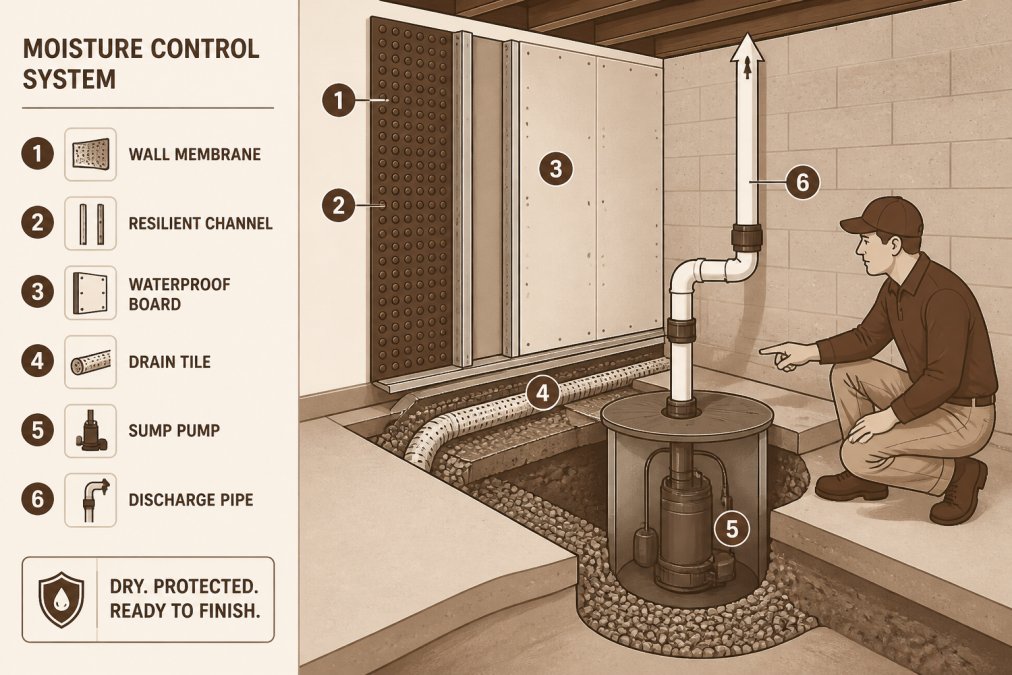
Phase 2: Preparation and Structural Work (2-4 weeks). The crew addresses foundational issues: waterproofing, structural repairs, framing for new walls. If moisture problems exist, this phase includes sump pump installation and interior or exterior drainage systems. This phase often uncovers surprises, hidden damage, unexpected soil conditions, that affect the timeline.
Phase 3: Systems Installation (2-3 weeks). HVAC, electrical, and plumbing rough-in work happens here. These trades must coordinate carefully. Delays in one system cascade to others.
Phase 4: Finishing (2-4 weeks). Insulation, drywall, paint, flooring, and custom elements like built-in cabinetry or home theater components. This phase is visible and feels like progress, but quality takes time.
Expect delays if you discover structural issues, water damage, or code violations during renovation. A contractor who builds buffer time into their estimate is being realistic, not pessimistic.
Beware of contractors who promise unrealistically short timelines. A 1,000-square-foot basement finished in 4 weeks suggests corners are being cut. Quality basement finishing requires proper sequencing and cure time for materials.
Best Practices for Basement Moisture Control During Renovation
Moisture is the enemy of basement living spaces. A finished basement with hidden moisture problems becomes a mold factory within months. Proper moisture control during renovation prevents this disaster.
Assess the moisture situation before starting. A contractor should inspect for signs of past or current water intrusion: efflorescence (white mineral deposits on concrete), staining, musty odors, or visible mold. They should understand whether your moisture problem is seepage, condensation, or groundwater pressure. Each requires different solutions.
Install or upgrade drainage systems. Interior drainage systems collect water from the foundation perimeter and route it to a sump pump. Exterior drainage addresses water before it reaches your foundation. Many basements benefit from both. Your contractor should explain which approach fits your situation and why.
Use moisture-resistant materials. Standard drywall absorbs moisture and supports mold growth. Basement-rated drywall, rigid foam insulation, and concrete sealers resist moisture better. Flooring choices matter too, vinyl, tile, or sealed concrete outperform carpet in basements.
Ensure proper ventilation. Basements accumulate moisture from daily activities: showers, laundry, cooking. HVAC systems must ventilate this moisture outside. A contractor should size your HVAC system to handle basement humidity, not just heating and cooling load.
Seal all cracks and gaps. Water finds tiny openings. A thorough contractor seals foundation cracks, window wells, and gaps where utilities enter the foundation.
The cost of moisture control during renovation is far less than fixing mold damage later. Don’t let a contractor minimize this phase to save money.
Evaluating Your Budget and Getting Accurate Quotes
Basement finishing costs vary widely based on scope, materials, and local labor rates. Without research data on specific pricing, the best approach is understanding what drives costs so you can evaluate quotes intelligently.
Get detailed estimates, not just a number. A vague quote like "$40,000 for basement finishing" is useless. A detailed estimate breaks down labor, materials, permits, and contingencies. It shows where money goes and makes it easier to compare contractors fairly.
Ask about contingencies. A responsible contractor includes a contingency fund (typically 10-15% of the project cost) for unexpected discoveries. This isn’t padding, it’s realism. When you open walls, you might find issues that weren’t visible before.
Understand what’s included. Does the quote cover permits? Inspections? Cleanup? Does it include all HVAC and electrical work, or are those add-ons? Clarify scope in writing before signing a contract.
Compare cost-per-square-foot carefully. If one contractor quotes $150 per square foot and another $200, the difference might reflect material quality, warranty terms, or included services, not just labor. Dig into what each price includes.
Discuss payment terms. A typical structure is 30-50% down, progress payments as work completes, and final payment upon completion. Avoid paying in full upfront. Also avoid contractors who demand cash-only payments.
Get everything in writing. Verbal agreements disappear when disputes arise. A written contract protects both you and the contractor by documenting expectations, timelines, costs, and what happens if changes occur.
When comparing basement finishing contractors, ask each one to quote the exact same scope of work. This makes prices comparable. A cheaper quote that excludes waterproofing or HVAC isn’t really cheaper, it’s incomplete.
Choosing the Right Basement Finishing Contractor for Your Needs
After gathering information, the decision comes down to fit. The best contractor for your project matches your priorities, communicates clearly, and demonstrates competence.
Prioritize communication style. You’ll interact with this contractor for months. If their communication style frustrates you during the estimate process, it won’t improve during the project. Choose someone who listens, explains clearly, and responds promptly to questions.
Look for collaborative approach. Basement finishing is custom work. Your vision matters. A contractor who treats you as a partner, asking about your needs, explaining trade-offs, and adjusting plans based on your feedback, creates better outcomes than one who imposes their vision.
Verify problem-solving ability. Ask how they’ve handled unexpected issues on past projects. Their answer reveals whether they panic, disappear, or solve problems creatively. You want a contractor who stays calm and finds solutions.
Consider long-term support. After the project finishes, will they stand behind their work? Do they offer warranties on materials and labor? Will they return if issues arise? A contractor who commits to post-project support demonstrates confidence in their work.
Berry Basements exemplifies this approach: licensed contractors with deep experience in the Grand Rapids area, a collaborative process that prioritizes your vision, and commitment to quality without cutting corners. They manage complex tasks, waterproofing, structural changes, HVAC integration, with expertise that prevents costly mistakes. Their track record of transforming basements into functional living spaces reflects genuine investment in client satisfaction.
When you’re ready to move forward, request a free estimate. This conversation will reveal whether a contractor is right for your project.
Choosing a basement finishing contractor is one of the largest home improvement decisions you’ll make. The right contractor transforms an underutilized space into a functional, valuable part of your home. They handle moisture control, structural integrity, and code compliance so you get a finished basement that lasts. Berry Basements brings licensed expertise, collaborative planning, and commitment to quality to every project. Get a free estimate and start your basement transformation with a contractor who prioritizes your vision and your home’s long-term value.
Frequently Asked Questions
What should I look for when vetting a basement finishing contractor?
Verify that your contractor holds a current license issued by your state's licensing board and carries liability insurance and workers' compensation coverage. Ask for references from recent basement projects in your area, and request to see photos or visit completed work. Check that they understand local building codes and can obtain permits. A trustworthy basement finishing contractor will provide a detailed written estimate, explain the project timeline clearly, and be willing to address your concerns about moisture control and structural integrity before work begins.
How long does a typical basement remodeling project timeline take?
Most basement remodeling projects take 4 to 12 weeks, depending on scope and complexity. A simple finishing project with framing, insulation, and drywall might take 4-6 weeks. Projects involving structural changes, HVAC installation, plumbing, or extensive waterproofing can extend to 8-12 weeks or longer. Your contractor should provide a detailed basement remodeling project timeline during the planning phase, including milestones for permits, inspections, and material delivery. Weather, permit delays, and unforeseen structural issues can add time, so build in a buffer when planning your schedule.
What are the best practices for basement moisture control?
Best practices for basement moisture control start before renovation begins. Install or upgrade a sump pump system to manage groundwater, seal foundation cracks with epoxy or polyurethane, and apply waterproofing coatings to interior or exterior walls. During renovation, use moisture-resistant materials like fiberglass reinforced panels or oriented strand board instead of standard drywall. Ensure proper grading around your foundation to direct water away from the building, and install a dehumidifier or HVAC system to manage humidity levels. Your contractor should assess your basement's moisture history and recommend a waterproofing strategy tailored to your home's conditions.
How do I compare quotes from different basement remodeling companies?
Request detailed written quotes from at least three contractors that break down labor, materials, permits, and timeline separately. Ensure all quotes address the same scope of work, including structural considerations, waterproofing, insulation, and HVAC requirements. Compare not just price but also the contractor's experience with projects similar to yours, warranty terms, and communication approach. Ask each contractor to explain their methodology for handling moisture control and structural integrity. The lowest quote isn't always the best value, focus on contractors who demonstrate expertise, transparency, and a collaborative process that prioritizes your vision.
This article was written using GrandRanker