

Last Updated: November 12, 2026
Quick Summary
The cost to waterproof a wet basement depends on where the water enters, how severe the problem is, and which method you choose, so two homes on the same street can get very different quotes. Contractors often quote waterproofing per square foot of basement floor area, but that rate is only meaningful when you know which method and scope it covers.
- Water enters through foundation cracks, the wall-floor seam, porous concrete, or surface water from poor grading and short downspouts.
- Interior waterproofing generally involves less excavation than exterior work and does not disrupt landscaping.
- Exterior waterproofing costs more because crews dig to the footing and must haul away soil.
- Ask contractors what square footage they used and which components are inside the rate before comparing bids.
- A quote far below the others usually means something was left out, not that you got a deal.
Table of Contents
- What Drives the Cost to Waterproof a Wet Basement
- Cost to Waterproof a Wet Basement per Square Foot
- Cost of Waterproofing Basement from Inside
- Cost to Waterproof Basement from Outside
- Using a Basement Waterproofing Cost Calculator
- Comparing Waterproofing Methods Side by Side
- How to Compare Contractor Bids and Spot Exclusions
- Request a Free Estimate for Your Wet Basement
- Frequently Asked Questions
What Drives the Cost to Waterproof a Wet Basement
The cost to waterproof a wet basement depends on where the water enters, how severe the problem is, and which method you choose. Two homes on the same street can get very different quotes. This guide breaks down what typically moves the price, so you can read a contractor’s estimate with confidence.
Waterproofing is not one job. It is a set of fixes aimed at a specific source of water. That is why a proper diagnosis comes before any number.
Where the Water Is Coming From
Water gets into a basement through four common paths: foundation cracks in the walls, the seam where the wall meets the basement floor, porous concrete that lets seepage through, and surface water that pools near the house because of poor grading or short downspouts. Each path calls for a different repair, and each repair carries its own material and labor costs.
If you are still diagnosing the source, our guide on fixing basement moisture before remodeling walks through the checks we run first.
How Severity Changes the Estimate
A hairline crack that seeps after heavy rain is a small job. A basement that takes on standing water every spring is not. Severity changes the estimate in three ways: the number of entry points, how much excavation or interior digging is needed, and whether mold or water damage has to be addressed before waterproofing starts.
The longer moisture sits, the more likely you are dealing with mold and mildew, damaged framing, or a failing basement floor. For spaces with ongoing dampness, our guide on finishing a basement with moisture explains how to plan the work. Those repairs add to the project estimate.
Cost to Waterproof a Wet Basement per Square Foot
Contractors often quote waterproofing per square foot of basement floor area, which makes it easier to compare bids on different-sized homes.
Pricing for waterproofing depends on quantity, site conditions, and the method chosen, so per-square-foot figures can vary widely. For current prices or a quote, contact Berry Basements through our website.
The rate climbs with complexity: more entry points, longer wall runs, deeper footings, and harder access all push the number up.
Watch out: a low per-square-foot rate that excludes the sump pump, the discharge line, or soil disposal may be an incomplete scope, and missing line items can appear later as change orders.
Ask each contractor three questions before comparing rates: What square footage did you use, floor area or wall area? Which components are inside the rate? And what site conditions would move the final price? Written answers to these questions make bids easier to compare.
Cost of Waterproofing Basement from Inside
Interior waterproofing is a common approach for finished and unfinished basements, and it generally involves less excavation than work on the outside. The work happens inside, so there is no excavation around the foundation and no disruption to landscaping. But “interior waterproofing” is an umbrella term, and the estimate depends on which components your water source actually requires.
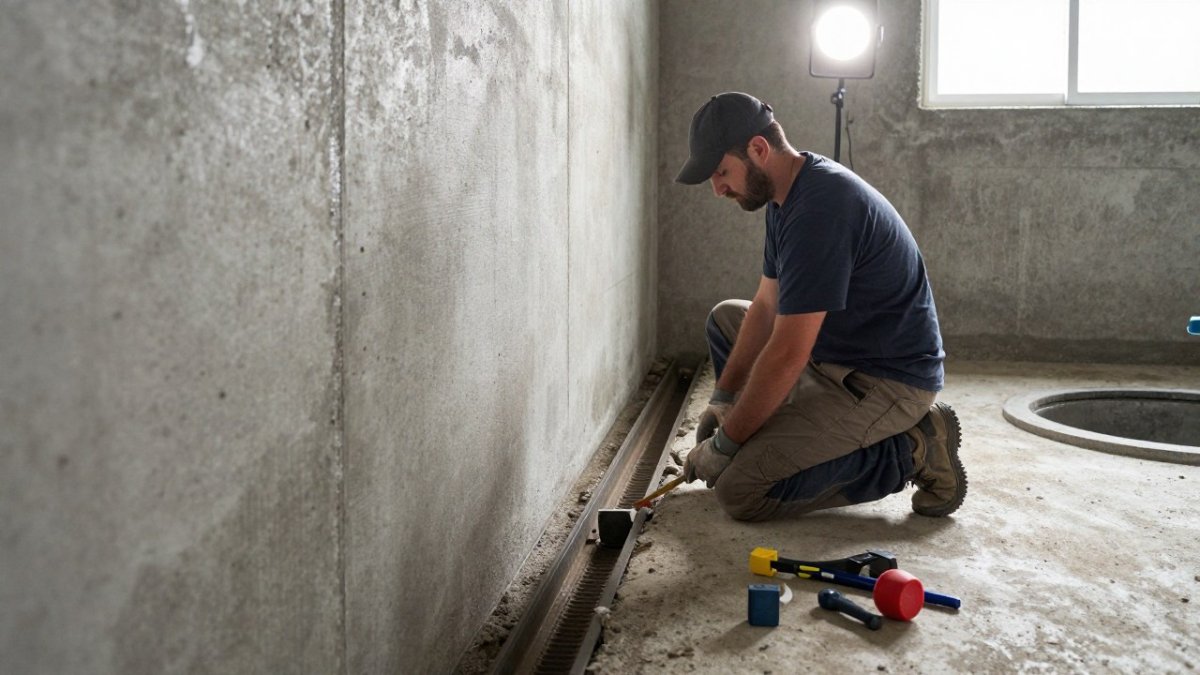
Interior Drainage, Sump Pumps, and Crack Injection
An interior system has three main parts, and each is priced as a separate line item:
- Interior drainage (drain tile or French drain): a channel cut along the base of the basement walls that collects water and routes it to a sump pit. Pricing is typically tied to the length of the perimeter that needs work. Finished basements add cost because flooring and drywall must be opened and restored.
- Sump pump and discharge: the pump pushes collected water out through a discharge line. A primary pump, a battery backup, and a liner are separate line items, and the discharge route, gravity to daylight versus a lift pump, changes the labor. Pump replacement on an existing pit is a smaller job than a new pit and discharge installation.
- Crack injection: seals individual foundation cracks with an expanding polyurethane or epoxy sealant. It is the right fix for isolated cracks, not for water at the wall-floor seam. Injecting a crack does nothing for hydrostatic pressure coming up through the floor.
- Waterproofing coating: a cementitious or crystalline coating applied to basement walls for added moisture control. It manages dampness rather than active water flow.
Homeowners with a genuinely wet basement often need drainage plus a pump rather than a coating alone. If you want the full method, our walkthrough on installing interior French drains for basements covers the steps.
Matching the Interior Fix to the Water Source
Before requesting interior quotes, document where and when water appears. A simple sequence narrows the cause and makes bids comparable:
- Note whether water shows after rain, during snowmelt, or year-round. Rain-driven water points to surface grading or wall cracks; year-round water points to groundwater pressure at the wall-floor seam.
- Check whether the wet line is at the cove joint (where wall meets floor), mid-wall, or across the floor slab. Cove-joint water is the classic interior drainage case; mid-wall water is a crack or coating case; water through the slab is a different problem that interior perimeter drainage may not solve.
- Confirm downspouts discharge well away from the foundation and that the grade slopes away. Fixing grading and downspouts is inexpensive and sometimes reduces the scope enough to change the quote.
- Photograph and date each observation. Contractors give tighter, more comparable estimates when they can see the pattern rather than hear a description.
Watch out: an interior system manages water rather than eliminating it, so if the basement also has structural cracking or bowing walls, waterproofing alone will not fix the cause and the estimate should include a structural assessment.
Interior work is usually the practical choice when the basement is already finished or the budget is tight, and it is the lower-disruption path for a wet basement that leaks at the wall-floor seam. The key is to price each component separately so you can see what you are buying and compare bids on the same scope.
Cost to Waterproof Basement from Outside
Exterior waterproofing is the more thorough option, and it costs more because it involves excavation. Crews dig down to the footing, repair and seal the foundation wall with a waterproofing membrane, and install exterior drainage that moves groundwater away from the house.
The bill is driven by how much soil has to be removed, whether a deck, patio, or driveway sits over the digging area, and how far the crew must haul the spoil. Exterior work addresses hydrostatic pressure directly, while interior systems manage it rather than eliminate it.
Using a Basement Waterproofing Cost Calculator
Online calculators give you a rough starting range, not a quote. Most ask for your basement size, the severity of water intrusion, and the method you are considering, then multiply those inputs by regional rates. Treat the output as a budgeting tool.
Here is a simple way to sanity-check any calculator result against your own situation:
- Measure the length of every wall that shows moisture
- Count the visible foundation cracks
- Note whether water appears after rain, during snowmelt, or year-round
- List any mold, peeling paint, or damaged drywall
- Check whether downspouts discharge within a few feet of the foundation
A site visit is the most reliable way to get a project estimate.
Comparing Waterproofing Methods Side by Side
Each method solves a different problem, and the right pick depends on your water source and budget. Here is how the main options compare.
| Method | Best For | Disruption | Ongoing Needs |
|---|---|---|---|
| Crack injection | Isolated wall cracks | Low | Minimal |
| Waterproofing coating | Damp walls, minor seepage | Low | Reapplication over time |
| Interior drainage + sump pump | Water at the wall-floor seam | Moderate | Pump maintenance |
| Exterior membrane + drainage | Hydrostatic pressure, major leaks | High | Low |
Interior systems can be a practical choice when the basement is already finished or the budget is a concern, while exterior work is typically considered when the foundation itself is the problem. If you want the full method comparison, read our step-by-step guide to waterproofing a damp basement.
How to Compare Contractor Bids and Spot Exclusions
The lowest bid is not always the best value. Bids differ in what they include, and the gaps are where surprise costs hide. Read every quote line by line and check for these exclusions:
- Permits and inspections left out of the total
- Sump pump and discharge line listed as an add-on
- Disposal of excavated soil charged separately
- Mold remediation excluded entirely
- Warranty terms missing or vague
- Patch and restore work after the job not included
Ask each contractor to itemize material costs and labor costs separately. A clear bid lists quantities, not just a lump sum. Also confirm the warranty in writing and ask what happens if water returns after the job. Watch out: a quote that is far below the others usually means something was left out, not that you got a deal.
Request a Free Estimate for Your Wet Basement
A wet basement is a solvable problem, but the fix has to match the source of the water. Guessing at the method wastes money and often means doing the job twice.
At Berry Basements, we are licensed basement contractors serving the Grand Rapids area since 2017. We take a collaborative approach, working closely with clients from planning through execution, and we manage complex tasks with a commitment to quality.
If you are planning to finish the space after waterproofing, our team covers basement finishing in Caledonia, MI with permits handled and a clear build timeline.
Get started with Berry Basements and request a free estimate for your wet basement today.
Frequently Asked Questions
Will insurance pay for basement waterproofing?
Most homeowners insurance policies exclude water intrusion from groundwater, seepage, or poor drainage, so waterproofing is usually an out-of-pocket cost. Coverage may apply if the damage came from a sudden event like a burst pipe. Check your policy language and ask your insurer directly before assuming anything is covered. Keep photos and receipts, since some policies reimburse emergency water removal even when they exclude the waterproofing itself.
Is it worth it to waterproof a basement?
Waterproofing protects the investment you have already made in your home. Unaddressed moisture leads to mold, ruined finishes, and structural wear, and those repairs usually cost more than prevention. It also matters if you plan to finish the space: no contractor should frame and drywall over an active leak. Fixing the water source first is the difference between a basement that stays dry and one you have to redo.
What factors affect a basement waterproofing estimate?
The biggest factors are the source of the water, the size of the basement, the method chosen, and access. Interior systems cost less because crews work from inside without digging. Exterior work adds excavation, soil disposal, and landscaping restoration. Severity matters too: a damp wall with minor seepage needs less work than standing water or hydrostatic pressure pushing through the floor. Local soil and water-table conditions can shift the number either way.
How much does it cost to waterproof a 2,000-square-foot basement?
There is no single number, because price depends on the method and the water problem, not just square footage. A 2,000-square-foot basement needing interior drainage and a sump pump is a very different project from one needing full exterior excavation. Use square footage as one input in a basement waterproofing cost calculator, then get an itemized quote that lists quantities, materials, and labor so you can compare bids on equal terms.
