

Quick Summary
Control basement office moisture by first finding the source, whether groundwater, leaks, or humid air, then managing the air. Use a hygrometer to keep indoor relative humidity between 30% and 50%, and size a dehumidifier by pint capacity and room square footage. Fix grading, gutters, and cracks before relying on a dehumidifier alone.
- Test the floor with plastic sheeting for 48 hours to tell slab moisture from humid indoor air.
- Most people aim for indoor relative humidity between 30% and 50% in the basement.
- For a 150-300 sq ft basement office, a 20-30 pint dehumidifier is often enough if the space is sealed and dry.
- A dehumidifier will not stop water entering through a crack, so fix the source first.
- Start with grading, gutters, and downspout extensions, the lowest-cost fixes, before escalating to drainage work.
Table of Contents
- Why Basement Office Moisture Matters for Your Work and Equipment
- Causes of Basement Moisture: Find the Source Before You Fix It
- Diagnosing Whether Moisture Comes Through the Walls, Floor, or Air
- Choosing a Basement Dehumidifier Guide: Sizing, Features, and Placement
- Basement Waterproofing Solutions for Walls, Floors, and Drainage
- Basement Subfloor Moisture Protection Under Flooring and Carpet
- Booking a Moisture Assessment for Your Basement Office
- Frequently Asked Questions
Why Basement Office Moisture Matters for Your Work and Equipment
Last Updated: October 31, 2026
Working in a damp basement office costs more than comfort. Humid air can warp paper, corrode electronics, and encourage mold growth on walls and furniture. Moisture is the problem homeowners most often overlook until something goes wrong when basements are converted into workspaces.
Basement air tends to hold more moisture than air upstairs. The lower level sits closer to the soil, so water vapor moves in from the ground and stays trapped by cool concrete walls. A basement office that feels fine in spring can turn muggy by midsummer.
Moisture control is the foundation of a usable workspace. Once you understand where the water comes from, the fixes become much simpler.
Causes of Basement Moisture: Find the Source Before You Fix It
Basement moisture usually comes from one of three places: groundwater pressing against the foundation, water leaking through cracks or joints, or humid air moving into the space. Each cause needs a different fix, so guessing wastes money.
Common sources include:
- Poor grading: Soil that slopes toward the house pushes rainwater toward the foundation.
- Clogged gutters: Overflowing water runs down the walls and settles near the footings.
- Cracked or unsealed walls: Small openings let moisture seep in during storms.
- Uncontrolled indoor humidity: Showers, laundry, and cooking add vapor that the basement holds.
Watch out: a dehumidifier will not stop water that is entering through a crack. Fix the source first, then manage the air.
Diagnosing Whether Moisture Comes Through the Walls, Floor, or Air
Start with a simple test. Tape a square of plastic sheeting to the concrete floor and leave it for 48 hours. Water droplets on the underside of the plastic point to moisture moving through the slab. Condensation on top of the plastic points to humid indoor air.
Next, check the walls. Look for white mineral deposits, peeling paint, or dark staining along the lower wall. These signs often mean water is entering from outside.
Use a hygrometer to measure the air. Most people aim for indoor relative humidity between 30% and 50%. Readings above that range make mold and dust mites more likely.
Choosing a Basement Dehumidifier Guide: Sizing, Features, and Placement
A dehumidifier is usually the workhorse of a basement office moisture plan, but the wrong unit wastes energy and never hits your target. Size it to the room and the moisture load, then place it where it can actually dry the air your desk sits in.
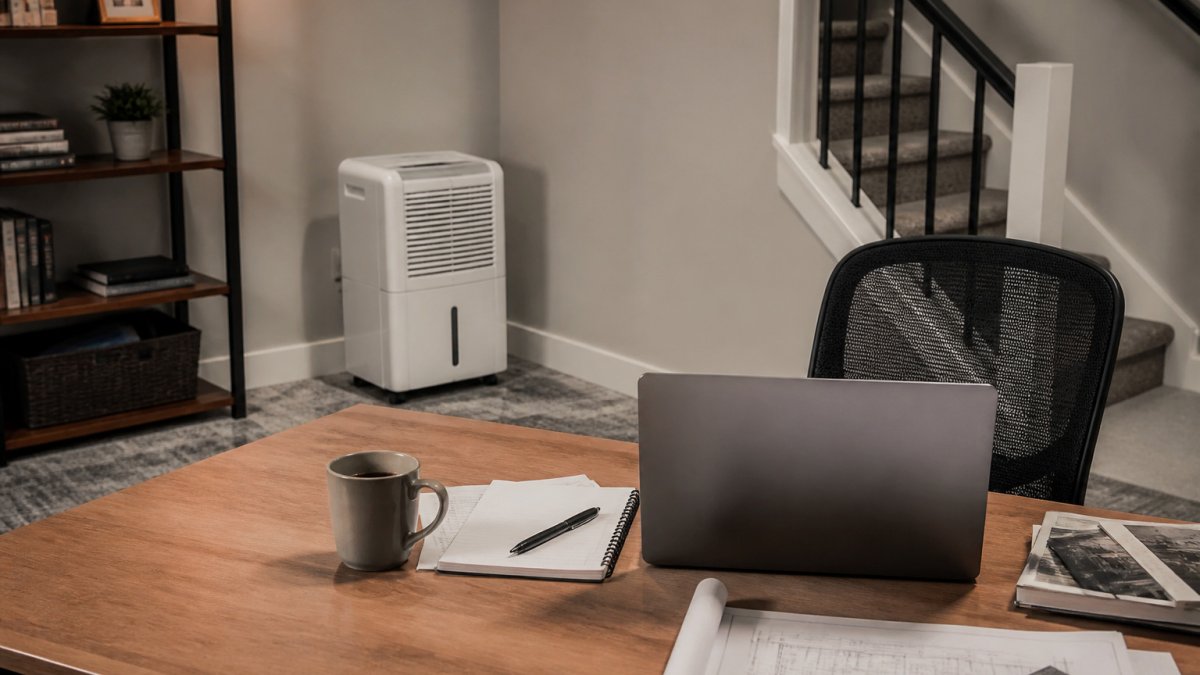
Sizing by pint capacity. Manufacturers rate dehumidifiers by pints of water removed per 24 hours, typically at 80°F and 60% relative humidity. A common rule of thumb from the Association of Home Appliance Manufacturers (AHAM) is to start with the room’s square footage and adjust upward for damp conditions:
- Up to 500 sq ft, moderately damp: 20-30 pint unit.
- 500-1,000 sq ft, moderately damp: 30-50 pint unit.
- 1,000-1,500 sq ft, or any size with visible dampness: 50-70 pint unit.
- Very wet spaces (seepage, musty smell, high water table): add 10-20 pints to the baseline for the square footage.
For a typical basement office of 150-300 sq ft, a 20-30 pint unit is often enough if the space is otherwise sealed and dry. If the office shares an open basement with laundry, storage, or a sump pit, size for the whole open area, not just the desk footprint.
Features that matter for a workspace.
- Built-in humidistat: lets you set a target (see below) so the unit cycles instead of running continuously.
- Continuous drain option: a hose to a floor drain or condensate pump saves daily tank emptying and prevents the unit from shutting off when full.
- Low-temperature operation: basement air stays cool year-round; a unit rated for 41°F or lower keeps working in winter instead of frosting over.
- Noise rating: look for a sound level in the low 40s dB(A) or quieter if the unit will run during calls. Compressor units are louder than desiccant units, but desiccant models cost more to operate.
- Wi-Fi or app control: useful for checking humidity remotely, but not a substitute for a standalone hygrometer.
Placement for an office. Put the unit in the openest part of the basement, at least 6-12 inches from walls and away from furniture that blocks intake and exhaust. Do not tuck it behind the desk or inside a closet, recirculated air defeats the purpose.
Set a target, don’t guess. Keeping relative humidity roughly between 30% and 50% in a workspace helps limit mold and dust mites. Adjust the humidistat seasonally to stay in that range.
Pair the dehumidifier with a hygrometer placed at desk height, away from the unit’s exhaust and away from exterior walls. Track readings morning and afternoon for two weeks, that log tells you whether the unit is keeping up or whether you have an air-sealing or drainage problem the dehumidifier cannot fix.
If the whole house runs humid, a whole-home system integrated with the HVAC may be worth discussing with an HVAC contractor.
Basement Waterproofing Solutions for Walls, Floors, and Drainage
Waterproofing is not one product, it is a decision tree. Before you buy a sealer or call a contractor, confirm where the water is coming from, because the wrong fix wastes money and can trap moisture behind a finish.
Match the fix to the source.
- Water entering through wall cracks or joints: hydraulic cement or polyurethane injection for active leaks, then a flexible sealant. Penetrating silane-siloxane sealers reduce absorption on porous concrete but will not stop a flowing crack.
- Water pushing up through the floor (hydrostatic pressure): interior drainage, a perimeter channel leading to a sump pit and pump, is the common fix. Sealers on the floor alone rarely hold.
- Water running down exterior walls: fix grading and gutters first. Soil should slope away from the foundation, and downspouts should discharge well away from the wall.
- Humid air, not liquid water: this is a ventilation and dehumidification problem, not a waterproofing problem. Sealing the walls will not dry the air.
Interior vs. exterior waterproofing. Interior systems (drainage channels, sump pumps, sealers) can be done without excavation but manage water after it enters. Exterior systems (footing drains, waterproof membranes, grading) address water before it reaches the wall but require digging. You can see a finished example in our Yamoto Way remodeling and finishing project.
Sealing air leaks is part of waterproofing. Caulk and foam around rim joists, pipe penetrations, window wells, and sill plates. Air sealing reduces both drafts and the humid summer air that condenses on cool basement surfaces.
If you see visible mold larger than roughly 10 square feet, smell a persistent musty odor after cleaning, or have recurring water intrusion after storms, stop DIY work and bring in a qualified professional. Porous materials like drywall and carpet that have been wet for more than 24-48 hours usually need removal, not drying in place. Professional assessment is advisable for mold remediation beyond small areas, and licensing requirements for waterproofing and structural work vary, so check with your local authorities.
Get a clear scope before you commit. Waterproofing often involves excavation, permits, or structural work. Ask for a written scope that names the water source being addressed, the method, and what is excluded. A contractor who recommends a sealer without diagnosing the source is guessing.
After waterproofing, verify. Re-run the plastic-sheet test on the floor and check walls for new staining after the next heavy rain. Keep a humidity log at desk height for a month. If readings stay above 50%, the remaining moisture is likely air-borne and needs ventilation or dehumidification, not more sealer.
The table below summarises which fix suits each moisture source, so you can match the method to the problem before buying a product or hiring a contractor.
| Moisture source | Recommended fix | Key note |
|---|---|---|
| Water through wall cracks or joints | Hydraulic cement or polyurethane injection, then flexible sealant | Penetrating sealers will not stop a flowing crack |
| Water pushing up through the floor | Interior drainage: perimeter channel to sump pit and pump | Floor sealers alone rarely hold |
| Water running down exterior walls | Fix grading and gutters first | Downspouts should discharge well away from the wall |
| Humid air, not liquid water | Ventilation and dehumidification | Sealing walls will not dry the air |
Basement Subfloor Moisture Protection Under Flooring and Carpet
Carpet and wood flooring trap moisture underneath, where mold can grow unseen. Before you install a floor in your basement office, test the slab and fix any active water issues.
Use a vapor barrier beneath the subfloor and leave a small gap at the walls for airflow. For more on finishing a basement space, read How to Brighten a Basement Without Natural Light. Choose moisture-resistant materials such as vinyl plank or sealed concrete for areas most likely to stay damp.
Check the floor every few months by lifting a corner. A musty smell or soft spots signals trapped moisture that needs attention.
Booking a Moisture Assessment for Your Basement Office
If you are unsure where your moisture is coming from, a professional assessment saves time. A contractor can check grading, test the slab, and recommend the right mix of sealing, drainage, and dehumidification for your space.
Berry Basements offers a free estimate for basement finishing projects, and we can walk you through moisture concerns during planning. Readers in Jenison can review our basement finishing in Jenison, MI service details before booking. Our basement finishing in Hudsonville, MI page covers custom design, permit handling, and the build timeline.
Ready to make your basement office dry and comfortable? request a free basement finishing estimate to start planning your project.
Frequently Asked Questions
How do I control moisture in a basement office?
Start by measuring relative humidity with a hygrometer and checking for visible water, condensation on cool pipes or walls, and musty odor. Then address the source: improve exterior grading and gutter drainage, seal air leaks and foundation cracks, and run a properly sized dehumidifier to keep humidity in a comfortable range. Keep furniture and documents off the floor and away from exterior walls. If humidity stays high after these steps, or you see water entering through the walls or floor, get a professional assessment before finishing the space.
What humidity level should a basement office have?
Most indoor air quality guidance recommends keeping relative humidity between about 30 and 50 percent. Staying near the lower-middle of that range helps limit mold, mildew, and dust mites, and protects paper, electronics, and wood furniture. A basic digital hygrometer costs little and gives you a continuous reading, which is more useful than checking occasionally. If readings regularly exceed 50 percent, your dehumidification or ventilation needs attention.
Will a dehumidifier fix a damp basement?
A dehumidifier removes moisture from the air, so it helps with humidity-driven dampness and condensation. It will not stop liquid water from seeping through cracks or rising from the floor after heavy rain. Use it alongside exterior drainage fixes, sealing, and waterproofing when water is entering the space. Size the unit to the basement’s square footage and moisture load, and make sure its condensate drains to a floor drain, sump, or pump. Ask Berry Basements for a quote if you want the setup assessed as part of a finishing project.
When should I call a basement waterproofing professional?
Call a professional when you see active water intrusion, efflorescence (white mineral deposits on walls), bowing or cracked foundation walls, or mold covering more than a small area. Persistent dampness that returns after you have sealed gaps and run a dehumidifier also points to a problem outside the air. A qualified contractor can test where water is entering and recommend exterior drainage, interior drainage, or wall and floor solutions. Pricing depends on the scope of the work, so request a written estimate from Berry Basements or another licensed contractor.
