

Last Updated: November 8, 2026
Quick Summary
Protect basement assets during construction by first inventorying and relocating stored items, then covering flooring and sealing HVAC registers before any demolition begins. Most damage occurs during demolition and framing, so the basement’s systems and belongings need protection before work starts. Testing the sump pump and staging materials off the slab also help.
- Most damage happens during demolition and framing, not finish work.
- Pack breakable items in sealed plastic bins, not cardboard, and label each one.
- Seal every supply and return register with plastic sheeting and tape.
- Test the sump pump before demolition by pouring a bucket of water into the pit.
- Use breathable tarps on stacked materials rather than sealed plastic.
Table of Contents
- Why Basement Assets Are Most Exposed During Construction
- Step 1: Inventory and Move Stored Items Before Work Starts
- Step 2: Protect Existing Flooring and Finishes
- Step 3: Protecting HVAC During Home Construction
- Step 4: Basement Renovation Site Preparation
- Step 5: Minimizing Construction Dust During Remodeling
- Booking Your Protected Basement Renovation With Berry Basements
- Frequently Asked Questions
Why Basement Assets Are Most Exposed During Construction
Your basement holds more than storage boxes. It holds furnace ductwork, the water heater, electrical panels and, often, the things you can least afford to replace, which makes protecting your basement assets the first priority on any project. A well-planned renovation starts by treating those assets as the first thing to protect, not the last. A basement project is a construction site sitting directly under your living space, so dust, debris, moisture and foot traffic all reach the items you care about most.
Most damage happens during demolition and framing, not during finish work. Walls get opened, subfloors get cut, and existing finishes take hits from tools and materials moving through a confined space.
Common exposure points include:
- Stored furniture, electronics and keepsakes near the work zone
- Existing flooring, carpet and trim along traffic paths
- HVAC runs, vents and returns that collect dust
- Water heaters, sump pumps and utility connections
- Stairways and entry doors used to haul materials in and out
Knowing where your belongings and systems are exposed makes the rest of the plan much easier to follow.
Step 1: Inventory and Move Stored Items Before Work Starts
Start by walking through the basement with a clipboard and listing everything you want to keep. Note valuables, documents, sentimental items and anything that would be costly to replace. Take photos as well, since a visual record helps with insurance if something goes wrong.
Next, plan where those items will go. Upstairs closets, a garage or a rented storage unit all work well. Pack breakable items in sealed plastic bins rather than cardboard, which can absorb moisture and dust. Label each bin with its contents and destination room.
Keep a clear path for workers, and move anything that would block a doorway or stairway. Clearing the work area completely before the first day on site prevents delays and reduces the chance of accidental damage.
The main steps for protecting stored items and the basement’s systems before work begins are summarised below.
| Step | What to do | Timing |
|---|---|---|
| Inventory | List valuables, documents and sentimental items; take photos | Before work starts |
| Relocate | Move items to upstairs closets, a garage or a storage unit | Before the first day on site |
| Packing | Use sealed plastic bins, not cardboard; label each bin | Before moving |
| Clear path | Remove anything blocking doorways or stairways | Before the first day on site |
Step 2: Protect Existing Flooring and Finishes
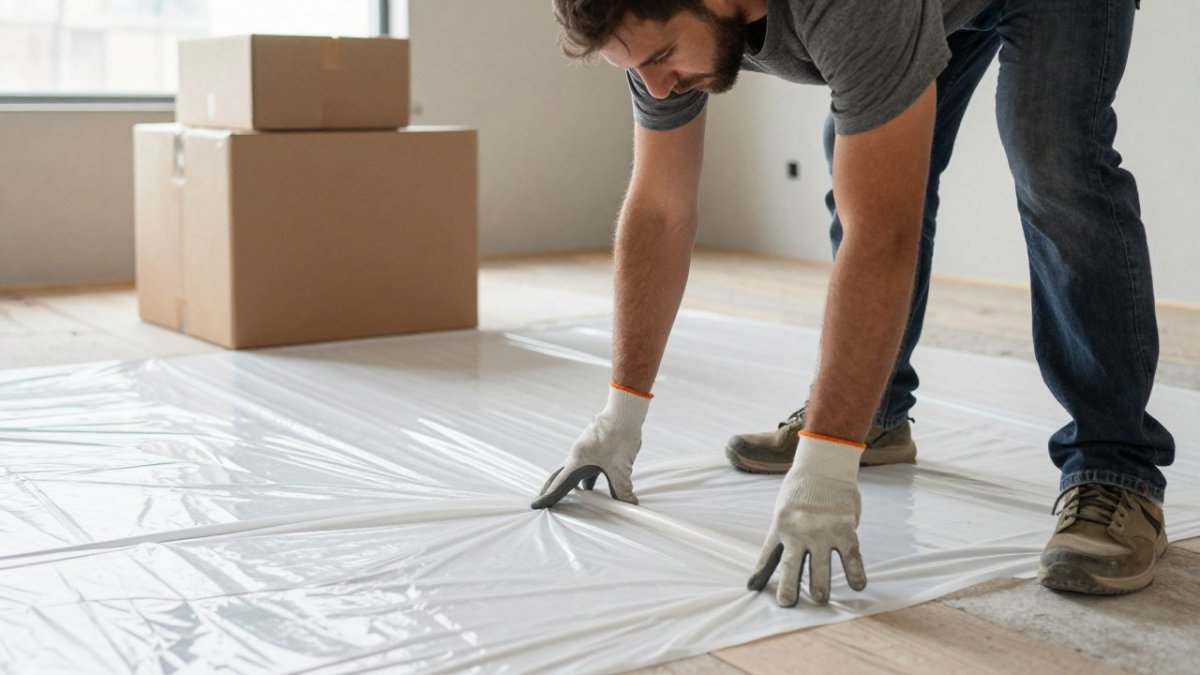
Existing flooring on the main floor and stairs is often overlooked. Lay heavy-duty ram board or rosin paper along every route workers will use, from the entry door to the basement stairs. Tape seams so nothing shifts underfoot.
Cover any finished surfaces that stay in place, including handrails, door casings and built-in cabinetry. Use painter’s plastic taped at the edges rather than tape alone on delicate finishes, since adhesive can pull up paint or veneer.
Protect the basement floor too. If the existing concrete will be reused, cover it with drop cloths or protective board before heavy material is stacked on it. Scratches and stains on bare concrete are easy to avoid and difficult to fix later.
Step 3: Protecting HVAC During Home Construction
Your heating and cooling system is one of the most sensitive assets during a basement project. Drywall dust, sawdust and insulation fibers can clog filters and coat the blower motor if they enter the ductwork.
Before work begins, seal every supply and return register in the basement with plastic sheeting and tape. For a practical walkthrough of working around existing ductwork and vents during renovation, see Basement Renovation Around Existing HVAC: A How-To Guide. If the furnace or air handler sits in the work area, enclose it fully and keep its filter in place for the duration of the project. Replace that filter more often than usual, since it will catch far more debris than normal.
Ask about temporary ductwork changes early. Some renovations move or add vents, and any change needs to be planned so the system keeps balanced airflow.
Step 4: Basement Renovation Site Preparation
Good site preparation keeps the entire project moving, but in a basement it also decides whether water, soil movement and staged material storage become expensive problems. Before the first wall comes down, the work area needs a clear layout and a water plan. Mark the zones for demolition, material storage, debris staging and clean finish work, and keep stored materials at least a few inches off the slab on dunnage so a sudden damp floor does not wick into lumber, drywall or insulation.
Confirm the water picture before cutting. The highest-risk window is often the period when the foundation is opened, the slab is cut or the exterior is excavated, because hydrostatic pressure that was previously held back by intact walls and drainage now has a path. Walk the perimeter and note any damp spots, efflorescence, rusted tie rods or a sump pit that runs frequently. If a sump pump exists, test it before demolition by pouring a bucket of water into the pit and confirming the float trips and the discharge line is clear. A backup battery or a secondary pump is cheap insurance when the basement is full of tools and staged materials.
Protect the excavation and pit if the scope goes outside. When the project involves an exterior excavation, an egress window well, a walkout or underpinning, the open pit becomes the single biggest exposure. Keep the pit graded so surface water runs away from the wall, not into it, and cover the exposed wall and footing with plastic sheeting weighted at the edges if rain is forecast. Never leave an open excavation unshored overnight in saturated soil. A small slide after a storm can fill a fresh pit and undo days of work.
Stage materials for the phases, not the whole job. During phased construction, lumber, insulation and electrical gear can sit in a partially sealed basement for weeks, which is a common source of material damage. Stack framing lumber on stickers so air moves around it, keep insulation in its original wrapped bundles until the moment it is installed, and store electrical panels, fixtures and wire in a closed, elevated area away from the slab. Cover stacked materials with breathable tarps rather than sealed plastic, which can trap condensation against the surface. Rotate the staging area as phases complete so finished zones stop being used as storage.
Quick site prep checklist:
- Clear and label all stored items
- Lay protective flooring along traffic paths
- Seal HVAC registers and enclose the furnace
- Test the sump pump and confirm the discharge line is clear
- Grade exterior pits away from the wall and cover exposed foundation
- Elevate and cover staged lumber, insulation and electrical materials
- Mark utility lines before cutting
- Set up a separate debris exit route
Watch out: a sump pump that passes a quick test can still fail under a real storm load, so confirm the discharge line actually carries water away from the foundation rather than dumping it back against the wall.
Step 5: Minimizing Construction Dust During Remodeling
Dust is the most persistent problem in basement remodeling, but on a phased job it is only half the threat. Fine particles travel through HVAC systems, settle on every surface and linger for weeks, and at the same time humidity in a partially sealed basement can push building materials past the point where they install correctly. Controlling both protects your belongings, your indoor air quality and the materials you have already paid for.
Contain the dust first. Use poly sheeting to create a sealed work zone at the basement stairs and any doorway leading to the rest of the home. For detailed containment and cleanup methods, see Minimizing Construction Dust During Remodeling. A zipper door or a taped flap lets workers move in and out without opening a gap. Run a negative air machine with a HEPA filter if the scope of work is large, since it pulls dust out of the space rather than letting it spread.
Then control the moisture that dust control ignores. A basement under construction is not a sealed envelope, and the same open walls that let dust travel also let humid summer air reach cool concrete and framing. Lumber, drywall and insulation can absorb moisture quickly when a dehumidifier is not running, and material installed wet can cause problems long after the crew leaves. Run a construction dehumidifier in the work zone and keep it draining to a floor drain or sump rather than a bucket that fills overnight.
Build a temporary weatherization routine for storm events. Before the basement is fully sealed, a sudden storm can drive water through an open stairwell, an unflashed window well or a missing section of siding. Keep a small kit on site, tarps, weighted battens, a squeegee, a wet/dry vacuum and a roll of poly, and assign one person to close the work zone before any forecast storm. Cover open wall cavities and staged materials, check that the sump pit is clear, and confirm the discharge line is still routed away from the foundation.
Protect specific materials by type. Lumber should be stickered and covered with a breathable tarp, not sealed plastic. Insulation stays in its wrapped bundles until installation. Electrical panels, fixtures and wire belong in a closed, elevated area away from the slab. Drywall should be stored flat and off the floor, never leaned against a damp wall. Environmental Protection Agency explains the lead-safe practices that apply to this type of work (the EPA).
Watch out: a dehumidifier sized for a finished room will not keep up with an open construction zone, so confirm the unit is rated for the square footage and the open-air conditions before relying on it.
Booking Your Protected Basement Renovation With Berry Basements
Protecting your belongings and systems takes planning. As licensed basement contractors serving the Grand Rapids area, Berry Basements works collaboratively with clients to review the project and set expectations. Homeowners in Ada can get a free estimate for basement finishing in Ada, MI.
Ready to talk through your project? Request a free estimate and we can discuss your basement, your stored items and your HVAC layout as part of planning your project. Find out more about basement finishing in Byron Center, MI.
Frequently Asked Questions
Should I move my stored items out of the basement before construction starts?
Yes. Clearing stored items before work begins is the single most effective way to protect them. Move boxes, furniture, holiday decor and paperwork to a dry area above grade or into a storage unit. Items left behind are exposed to dust, debris, accidental impacts and moisture from temporary openings. Label anything you keep in the basement, photograph valuable pieces, and ask your contractor which zones will be sealed off so you know what can safely stay. Clear the space at least a few days before demolition begins.
How do I protect my HVAC system during a basement renovation?
Seal the supply and return registers in the basement with plastic or fitted covers, and keep the furnace or air handler enclosed or covered during demolition. Ask your contractor to replace or install filters on the system before finishing work and again once construction ends. Turn the system off or run it on a fan-only setting when cutting drywall or concrete. Dust that reaches the blower can damage the motor and coil over time, so confirm with Berry Basements how HVAC protection is handled in your project plan.
How do you protect existing basement flooring during construction?
Cover existing flooring with rosin paper or a fitted layer of ram board, then add plywood over high-traffic paths. Tape seams so debris and moisture do not work underneath. Avoid dragging materials across the floor, and lay down a protective path from the stairs to the work zone. Remove the protection only after the final cleaning is complete, since adhesives, paint and grout can stain bare surfaces. Pricing for protection materials and labor depends on the size of the space and project scope, so request a quote from Berry Basements for current figures.
