

Quick Summary
To hide electrical wiring in a basement ceiling, first identify your ceiling type, since that determines the method. Options range from painting joists and cables ($50-$150 materials) to wood trim, crown molding, a drop ceiling, or drywall, each trading cost, height and access differently.
- Open joists are the most common case in older basements and need the methods covered here.
- Paint is the cheapest option, with materials typically costing $50 to $150.
- A drop ceiling hides everything and allows access, but lowers the ceiling by 3 to 6 inches.
- Never cover junction boxes, outlets or switches with paint, trim or drywall.
- Never bury cable in a ceiling cavity without a permit and inspection.
Table of Contents
- Start With the Ceiling Type You Have
- Choosing a Method: Paint, Trim, Molding, or Drop Ceiling
- Is Exposed Romex Allowed in a Basement?
- Step-by-Step: Concealing Wires in a DIY Basement Ceiling
- Drop Ceiling Installation Cost vs. Other Concealment Methods
- Booking a Free Estimate for Your Basement Ceiling
- Frequently Asked Questions
Start With the Ceiling Type You Have
Last Updated: November 4, 2026
Hiding electrical wiring in a basement ceiling starts with one question: what kind of ceiling do you have? The answer decides almost every choice that follows. Most homeowners in Kent County land in one of three situations: open joists with exposed wiring, a drywall ceiling with wires running through or along it, or an unfinished ceiling that is about to be closed up.
Each situation calls for a different plan. Take a few minutes to look up at the ceiling with a flashlight before you buy anything.
- Open joists: The floor above is the ceiling. Wires run along the joist bottoms, often stapled in place.
- Drywall or plaster ceiling: Wires are usually hidden already. Any visible cable is likely a surface run or a junction box that needs a cover.
- Unfinished ceiling you plan to close: The best time to hide wiring is before the drywall goes up. Pull or reroute cables now, while access is easy.
Many homeowners find that open joists are the most common case in older basements. If that is your ceiling, the methods below will apply directly.
Watch out: never cover a junction box, outlet or switch with paint, trim or drywall. These must stay accessible for future repairs and inspections.
Choosing a Method: Paint, Trim, Molding, or Drop Ceiling
There is no single best way to hide wiring. The right method depends on your ceiling type, your budget, how much height you can spare, and whether you need to reach the wiring again later.
| Method | Best for | Difficulty | DIY time (500 sq ft) | Pro time | Typical material cost | Typical installed cost |
|---|---|---|---|---|---|---|
| Paint wires and joists | Open joists, small runs, tight budgets | Easy | 4-8 hours | 3-5 hours | $50-$150 | $300-$800 |
| Wood strips or trim over runs | Wires along beams, exposed ceilings you want to keep | Moderate | 8-16 hours | 6-10 hours | $150-$400 | $800-$2,000 |
| Crown or decorative molding | Finished look near walls, hiding perimeter runs | Moderate to hard | 12-20 hours | 8-14 hours | $200-$600 | $1,200-$3,000 |
| Drop ceiling (suspended grid) | Full concealment, access above, ducts and pipes too | Moderate | 20-40 hours | 12-20 hours | $600-$1,500 | $2,500-$6,000 |
| Drywall ceiling | Permanent finished look, new build or full remodel | Hard | Not typical DIY | 16-30 hours | $400-$900 | $2,000-$5,000 |
Paint is the cheapest and fastest option, and it works best when the ceiling is already dark or you are willing to paint the joists and cables the same color. Trim and molding give a cleaner, more finished look but take more cutting and fitting. A drop ceiling hides everything and gives you access panels, but it lowers the ceiling by roughly 3 to 6 inches depending on the grid and clearance, which matters in basements that are already under 7 feet.
Use the room’s function as a tiebreaker. A home theater or gym benefits from maximum height, so paint or trim is usually better than a drop ceiling. A playroom, laundry area, or storage zone can absorb the height loss and gains the cleanest look from a drop ceiling. If you plan to add circuits, speakers, or data cable later, a drop ceiling or a removable trim panel saves you from cutting drywall.
Plan the concealment around those points, not over them.
Is Exposed Romex Allowed in a Basement?
Many homeowners ask whether exposed Romex is allowed in a basement. In most cases, nonmetallic sheathed cable (often called Romex) can be run exposed in a dry, finished or unfinished basement, provided it is protected from physical damage and secured properly. Your local building department decides what applies to your home.
Basements can be damp, so cable in damp areas must meet specific requirements. Cable within reach of a person may need protection, such as conduit or a cable cover, depending on the location.
Watch out: an inspector may reject exposed cable that is stapled too loosely, runs across a ceiling where it can be hit, or sits in a wet area. Check your local code before you finish the job, and pull a permit when required.
Step-by-Step: Concealing Wires in a DIY Basement Ceiling
If you plan to do the work yourself, follow these steps in order. Work with the power off at all times.
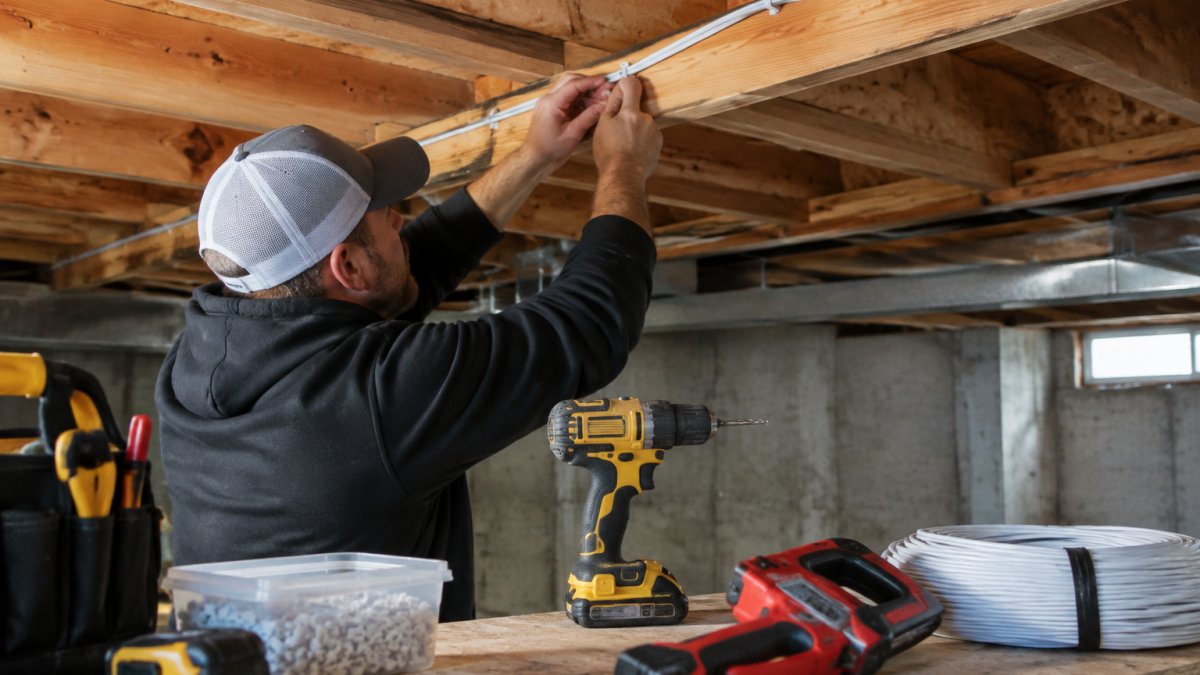
What you will need: voltage tester, drill, cable staples or straps, wire stripper, wood strips or trim, paint and brushes, and a flashlight.
- Map the circuits. Note which wires feed which outlets, switches and fixtures. Label them at the breaker panel.
- Turn off the power. Shut off each circuit and test every wire before touching it.
- Plan the route. Run cable along joists and beams in straight lines. Avoid crossing the middle of open bays where it can be bumped.
- Secure the cable. Staple or strap it at the spacing your local code requires, and keep it from sagging.
- Protect the cable. Add a cable cover, conduit or trim where it could be struck or where code requires it.
- Conceal the run. Paint the cable or attach wood strips over it. Keep junction boxes and splices accessible.
- Test the circuit. Restore power and check each outlet, switch and light before you close anything up.
Watch out: never bury cable in a wall or ceiling cavity without a permit and inspection. Hidden wiring is harder to fix later and can be a fire risk if damaged.
Drop Ceiling Installation Cost vs. Other Concealment Methods
A drop ceiling is the most complete way to hide wires because it creates a plenum space above the grid for cables, pipes, and ducts. It also gives you removable tiles for access. The trade-off is cost and ceiling height. The numbers below are realistic U.S. planning ranges for a 500-square-foot basement ceiling; get a local quote before you commit.
| Method | Material cost | Installed cost | Time to install | Height lost | Access to wiring after |
|---|---|---|---|---|---|
| Paint wires and joists | $50-$150 | $300-$800 | 4-8 hours DIY | None | Full (wires stay exposed) |
| Wood strips or trim | $150-$400 | $800-$2,000 | 8-16 hours DIY | 0.5-1 inch | Partial (remove strips) |
| Crown or decorative molding | $200-$600 | $1,200-$3,000 | 12-20 hours DIY | None | Partial (remove molding) |
| Drop ceiling (suspended grid) | $600-$1,500 | $2,500-$6,000 | 20-40 hours DIY or 12-20 hours pro | 3-6 inches | Full (lift tiles) |
| Drywall ceiling | $400-$900 | $2,000-$5,000 | 16-30 hours pro | None | Poor (cut and patch) |
A drop ceiling typically costs two to four times more than paint or trim, but it is the only method that hides everything and still lets you reach the wiring without demolition. If your basement ceiling is already below 7 feet, the 3-to-6-inch loss may make the room feel cramped, and paint or trim becomes the better choice. If you have ducts, plumbing, or future cable runs to conceal, the drop ceiling often pays for itself in access alone.
Compare the methods on four axes:
- Time: Paint is a weekend project. A drop ceiling is a multi-day job, and drywall is longer still.
- Difficulty: Paint and trim suit handy homeowners. Drop ceilings and drywall usually need a professional for a clean result.
- Access: Drop ceilings win. Painted or trimmed wiring requires removing fasteners to reach.
- Height: Paint and trim keep full height. Drop ceilings and drywall reduce it.
A simple decision rule: if you need to reach the wiring again and can spare the height, choose a drop ceiling. If height is tight or the budget is small, paint or trim the runs and leave the joists exposed. If you want a permanent finished look and never plan to open the ceiling, drywall is the end state, but budget for the electrician’s rough-in inspection before the board goes up.
Watch out: a drop ceiling grid must not block access to junction boxes, and any wiring above it still has to meet NEC support and protection rules. Do not use the ceiling tiles as a substitute for proper cable securing.
Booking a Free Estimate for Your Basement Ceiling
If you are ready to move forward, Berry Basements offers a free estimate for basement ceiling projects in Grand Rapids and surrounding areas. If your home is in Wyoming, MI, you can read about basement finishing in Wyoming, MI, which covers design, permits and inspections across Kent County. We are licensed basement contractors.
Ready to start? Book a free estimate for your basement ceiling and we will walk through the options with you. You can also compare how a drywall vs drop ceiling for basement finishing approach would fit your budget, or see a basement renovation timeline for families to plan the work around your household.
Frequently Asked Questions
How do I hide electrical wires in an exposed basement ceiling?
The most common options are painting the joists and wires a dark color so they blend in, adding wood strips or trim along beams to cover cable runs, or installing a drop ceiling that hides everything above the tiles. Each method has different costs and labor needs. Painting is the lowest-cost option and is best when the ceiling is already open and tidy. Trim or molding works well when you want a finished look without a full ceiling. A drop ceiling gives the cleanest result but requires access planning. Confirm any wiring work with a licensed electrician and your local building department before you close anything up.
Can you have exposed Romex in a basement?
In many cases, yes, but the rules depend on the location and how the cable is installed. The National Electrical Code (NEC) generally allows nonmetallic sheathed cable (Romex) to be run in unfinished basements when it is protected from physical damage, supported properly, and not run where it could be struck or exposed to moisture. Many jurisdictions also require the cable to be secured within a set distance of boxes and at regular intervals. Your local authority having jurisdiction, typically the building or inspection department, makes the final call. Check with them before you rely on exposed runs, especially if the basement will be finished later.
Is it cheaper to use a drop ceiling or paint exposed joists?
Painting exposed joists and wires is usually the lowest-cost route because it involves materials you may already own and modest labor. A drop ceiling requires a grid system, tiles, and installation time, so it costs more. Exact pricing depends on the size of the basement, the material you choose, and whether wiring must be moved first. For a quote tailored to your basement, contact Berry Basements for a free estimate.
What electrical code requirements apply to wiring in a basement ceiling?
Basement wiring must meet the NEC as adopted by your state or local jurisdiction. Key concerns include securing cable at proper intervals, protecting wire from nails and screws, keeping junction boxes accessible, and avoiding cable installed where it could be damaged or get wet. If you plan to finish the basement, any concealed wiring should remain accessible for future maintenance, and permits and inspections are typically required before walls or ceilings are closed. A licensed electrician can confirm the specifics for your home.
