

Last Updated: November 19, 2026
Quick Summary
The best materials for basement window wells are galvanized steel, heavy-duty plastic, fiberglass, and poured or precast concrete, each suited to different soil, drainage, and budget conditions. Galvanized steel suits standard replacements, plastic avoids rust, fiberglass resists corrosion, and concrete offers the longest-lasting permanent solution.
- Galvanized steel suits standard replacements with good drainage and an intact coating.
- Heavy-duty plastic does not rust but depends on proper backfill and anchoring.
- Concrete offers the longest service life but has the highest installation difficulty.
- Check steel wells each spring for flaking paint, rust spots, and seam separation.
- Confirm well dimensions meet egress code before ordering, since material cannot fix undersizing.
Table of Contents
- Why Window Well Material Matters for Your Basement
- Side-by-Side Comparison of Window Well Materials
- Metal Window Wells: Strength, Rust Risk and Cost
- Plastic Window Wells: Rust-Free but Watch the Fit
- Concrete Window Wells: Long-Term Durability and Installation Tradeoffs
- Window Well Drainage: How Material Choice Affects Water Control
- Choosing the Right Window Well for Your Site and Egress Needs
- Frequently Asked Questions
Why Window Well Material Matters for Your Basement
A window well is the metal, plastic, fiberglass, or concrete structure that holds back soil around a basement window. Its material decides how long it lasts, how well it sheds water, and whether it can handle the pressure of wet soil against it, so knowing the best materials for basement window wells helps you avoid repairs or replacement within a few years.
Most homeowners think about window wells only after water gets into the basement. The better time to choose is during a renovation or when a well starts to bend, rust, or crack. If you are planning finished living space, the window well becomes part of the egress and safety plan, so the material question matters even more. International Residential Code window well and egress requirements
Berry Basements works through these choices with homeowners during planning. The sections below compare the best materials for basement window wells so you can match one to your soil, your drainage, and your budget.
Side-by-Side Comparison of Window Well Materials
The main materials are galvanized steel, corrugated steel, heavy-duty plastic (polyethylene), fiberglass, and poured or precast concrete. Each trades off strength, rust resistance, weight, and cost differently. The table below uses the same criteria across every material so you can compare trade-offs directly instead of reading scattered descriptions.
| Material | Relative Upfront Cost | Expected Service Life | Maintenance Burden | Strength Under Soil Load | Installation Difficulty | Best Use Case |
|---|---|---|---|---|---|---|
| Galvanized steel | Mid | Long when coating stays intact | Low to moderate: annual inspection, zinc-rich touch-ups | High | Moderate | Standard replacements with good drainage and intact coating |
| Corrugated steel | Lower to mid | Shorter at seams and base | Moderate: seam and base checks, spot repair | High | Moderate | Budget replacements where the well is shallow and drains well |
| Heavy-duty plastic (polyethylene) | Mid | Long; no rust | Low: rinse, check anchoring and backfill | Moderate; depends on backfill and anchoring | Low: lightweight, easier to handle | Rust-free installs where the well matches the window opening |
| Fiberglass | Mid to higher | Long; no rust | Low: inspect for cracks and gel-coat wear | Moderate to high | Moderate | Damp or corrosion-prone sites needing a rust-free wall |
| Poured or precast concrete | Higher | Very long; effectively permanent | Very low: inspect joints and drain | Very high | High: heavy, more excavation and formwork | Long-term, permanent installs on wet or heavy-soil sites |
Cost varies with well size, depth, and installation difficulty. Pricing depends on the product, quantity, and whether excavation and drainage work are included, so request a quote for your site rather than relying on general figures. When you compare quotes, ask each contractor to break out material, excavation, drainage, and cover separately so the numbers line up.
Lifecycle cost is where the table matters most. The break-even point generally depends on how wet the site is and how long you plan to stay, so weigh expected service life and maintenance against the purchase price rather than comparing material alone.
Watch out: a well that is undersized for the window opening or the egress requirement will fail inspection or leak regardless of material, so confirm dimensions before you compare prices.
Metal Window Wells: Strength, Rust Risk and Cost
Steel window wells are the most common type. Galvanized steel is coated with zinc to resist corrosion, while corrugated steel has ridged walls that resist bending under soil pressure. Both handle load well, which is why they remain popular for tight, deep excavations.
The weakness is rust. Once the zinc coating is scratched or wears through, moisture gets into the metal and corrosion spreads, often starting at seams and at the bottom where water collects. Corrugated steel is more prone to this at its seams than solid galvanized panels.
Metal wells usually cost less up front than concrete, which makes them a practical choice when the budget is tight. The tradeoff is that you should plan to inspect them every few years.
Galvanized Steel Lifespan and Maintenance
Galvanized steel can last many years when the coating stays intact. Check the well each spring for flaking paint, white or red spots, and separation at the seams. Clear leaves and debris from the bottom so water does not sit against the metal. Touch up any scratches with a zinc-rich paint, and replace the well when rust has eaten through the wall rather than trying to patch a structural failure.
Watch out: a rusted, perforated wall can let soil in and lose its ability to hold back the earth, so repair early or replace before a section gives way.
Plastic Window Wells: Rust-Free but Watch the Fit
Heavy-duty plastic wells, usually polyethylene, do not rust, and they resist denting better than thin steel. They are also lightweight, which makes them easier to handle during installation.
Plastic has real limits. It is less rigid than steel or concrete, so it depends on proper backfill and anchoring to stay in shape under soil pressure. Fit is the other concern. Plastic wells come in standard sizes, and a poor match to your window opening or your egress needs can leave gaps or force an awkward cover.
Before buying plastic, measure the window opening and confirm the well depth matches the grade around your house. If you plan to install an egress window, confirm the well dimensions meet code before you order.
Concrete Window Wells: Long-Term Durability and Installation Tradeoffs
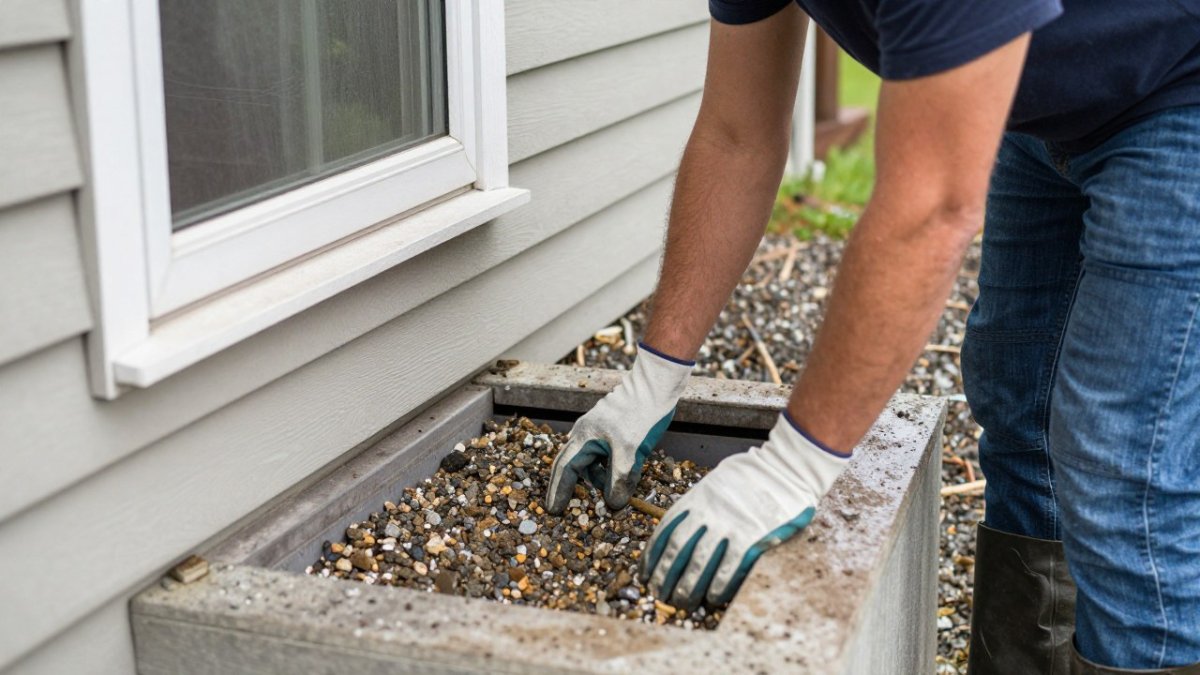
Concrete is the most permanent option. Poured or precast concrete wells do not rust or rot, and they resist soil pressure better than any other material. For a house you intend to keep for decades, concrete is often the best long-term value even though the upfront cost is higher.
The tradeoff is installation. Concrete wells are heavy and usually require more excavation, careful formwork, and sometimes equipment to set them. That makes them harder to retrofit onto an existing foundation, and the job takes longer. Installation cost can outweigh the material cost, so ask for the full project price rather than comparing material alone.
guidance on basement moisture and foundation protection
Window Well Drainage: How Material Choice Affects Water Control
Drainage matters as much as the wall material. A window well needs a way for water to leave the bottom, usually a layer of gravel and a drain connected to the foundation drainage system. Without it, the well fills with water and pushes against the window and the basement wall.
Material affects how well a well handles this. Metal and plastic wells need a sealed base and a drain outlet, and they can trap water at seams if they are installed poorly. Concrete wells can be cast with drainage in mind but still need a proper gravel bed and drain. No material fixes bad drainage by itself.
Check your drainage each season. Look for standing water after rain, staining on the basement wall, or soil washing into the well. Those signs point to a drainage problem, and a stronger well material will not solve it on its own.
Choosing the Right Window Well for Your Site and Egress Needs
Start with three questions. Is the window a standard window or an egress window? What is your soil like, and how much water does the site see? How long do you plan to stay in the house? A well for a basement you plan to finish as living space has different requirements from a well on a storage-only basement.
Site conditions should drive the material choice more than any single spec sheet. In cold climates with repeated freeze-thaw cycles, water trapped at the base of a well expands and can bow metal walls and crack rigid materials, so drainage and a well that tolerates movement matter more than raw strength. Heavy clay soil pushes harder against the walls than sandy soil, which favors steel or concrete over plastic.
Retrofit projects add their own constraints. Replacing a damaged well on an existing foundation usually means matching the new well to the existing window opening and the surrounding grade, and avoiding fasteners or anchors that are incompatible with the foundation type. A common pattern is that a like-for-like replacement in the same footprint is far simpler than changing material, because a different material often changes the required excavation, anchoring, and cover fit. Measure the opening, the well depth, and the distance from the window to grade before you order anything.
If the window will serve as an emergency exit, the well must be sized to meet egress rules. Egress requirements are set by the adopted residential code in your area. Confirm the dimensions with your local building department before you buy anything, because a well that works for light and drainage can still fail an egress requirement. Material choice follows from that: a deep egress well under heavy soil load is a poor place for a lightly anchored plastic well, while a shallow standard window may not justify the cost of concrete.
For most standard replacements, galvanized steel or heavy-duty plastic handles the job and fits a moderate budget. Choose concrete when the site is wet, the soil is heavy, or you want a permanent solution. Choose fiberglass when corrosion is the main concern and you want a rust-free material with good strength. Berry Basements can help you match the right well to your site during planning, including how it fits into a finished basement. Contact us for a free estimate and an honest look at which material makes sense for your home.
Frequently Asked Questions
What materials are basement window wells made from?
Basement window wells are most commonly made from galvanized or corrugated steel, heavy-duty plastic (typically polyethylene), fiberglass, and poured or precast concrete. Steel is the traditional choice and offers strength but can rust over time if the galvanizing wears. Plastic resists rust and dents and is lighter to install, though it can be less rigid under heavy soil pressure. Concrete offers long-term durability but is labor-intensive to install and harder to retrofit. Fiberglass combines corrosion resistance with a smooth, lightweight shell. Pricing varies by size, depth, and supplier, so compare current quotes directly from manufacturers or your contractor.
Are metal or plastic window wells better?
Neither is better in every situation. Metal window wells, especially galvanized steel, are strong and handle soil pressure well, but they can rust or dent, particularly where coatings are scratched or water collects. Plastic window wells resist rust and are easy to install, but they need a properly sized, well-supported profile to hold up against backfill pressure. For a dry, stable site with a sound foundation, plastic is often a low-maintenance choice. For deep wells or sites with heavy soil loads, a reinforced steel or concrete well may be the safer option. Match the material to your soil, depth, and drainage conditions.
How long do galvanized steel window wells last?
Galvanized steel window wells can last for decades when the zinc coating stays intact, but lifespan depends heavily on site conditions. Wet soil, road salt, and standing water accelerate corrosion, and scratches or dents expose the steel underneath. Inspect wells each spring and fall for rust spots, loose fasteners, and debris buildup, and touch up exposed areas with a rust-inhibiting paint. Replacement timing depends on how much corrosion has progressed through the metal, not just surface discoloration. A contractor can assess whether repair or replacement makes more sense.
What is the best material for an egress window well?
An egress window well must be large enough to let occupants climb out in an emergency, so the choice of material should support the required dimensions and a sturdy ladder or steps when needed. Steel and fiberglass wells are commonly used for egress applications because they hold their shape under soil load. Plastic wells designed for egress should be confirmed to meet local code dimensions and load requirements before purchase. Check with your local building department for egress requirements that apply in your area, and have a qualified contractor verify the installation.
