

Table of Contents
- 1. Install Durable Basement Gym Flooring Options
- 2. Set Up Your Unfinished Basement Gym with Proper Layout
- 3. Add Strategic Lighting and Electrical Upgrades
- 4. Install Wall-to-Wall Mirrors for Form Checking
- 5. Organize Storage Solutions for Gym Equipment
- 6. Manage Basement Gym Ventilation Requirements
- 7. Choose the Right Equipment for Your Basement Gym
- Conclusion
Last Updated: August 24, 2026
7 Basement Gym Ideas for Home Fitness
Converting a basement into a functional home gym eliminates barriers to consistency, reduces commute time, and lets you customize the environment to match your training style. The foundation starts with addressing moisture, managing noise, and ensuring your floor can handle equipment loads.
At Berry Basements, we’ve helped homeowners build basement gyms that balance functionality with the practical realities of below-grade spaces. Below are seven concrete basement gym ideas that solve these challenges head-on.
1. Install Durable Basement Gym Flooring Options
The foundation of any basement gym is the floor. Concrete subfloors are standard but unforgiving for equipment and joints. The right flooring protects your investment while managing the moisture basements naturally accumulate.
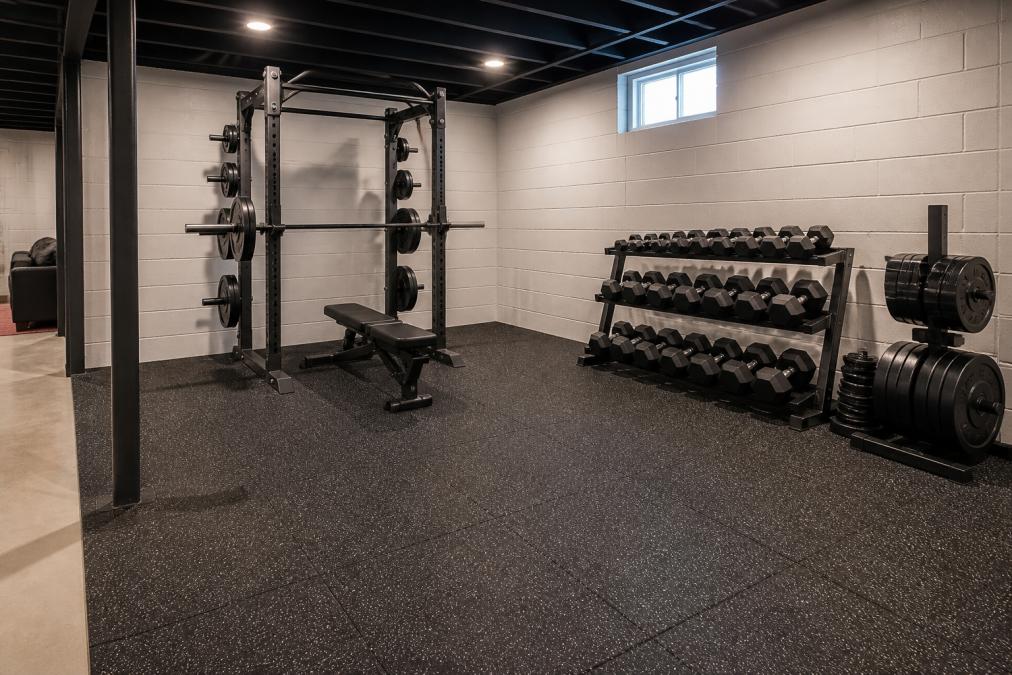
Rubber Flooring for Heavy Lifting
Rubber flooring is the gold standard for strength training. Recycled rubber rolls provide shock absorption that reduces joint impact and protects concrete from damage caused by dropping weights. A 1/4-inch or 3/8-inch thickness handles most home gym applications.
Installation requires a clean, dry concrete subfloor with a moisture barrier underneath to prevent water vapor degradation. Properly installed rubber flooring lasts 10-15 years with minimal maintenance and significantly dampens sound, reducing noise to upper floors (peer-reviewed research). Verify your concrete subfloor can support the additional weight before installation. Berry Basements can assess your basement’s structural capacity and recommend appropriate thickness.
Exercise Mats for Cardio and Functional Training
High-density exercise mats provide cushioning for high-impact activities while protecting concrete. They’re easier to install than rubber rolls and can be repositioned as your layout evolves. Pair mats with a moisture barrier or dehumidifier to prevent moisture trapping. Many home gym owners use mats in cardio zones and rubber flooring in strength zones, creating distinct areas optimized for different equipment.
2. Set Up Your Unfinished Basement Gym with Proper Layout
Layout determines whether your basement gym feels functional or cramped. Define separate zones for strength training, cardio, functional training, and stretching to create natural flow while accounting for ceiling height and structural elements.
Define Workout Zones by Equipment Type
Position a squat rack or power rack away from foot traffic with adequate vertical clearance. Place cardio equipment along walls near return air vents to circulate sweat-laden air. Store dumbbells and kettlebells in corners or on wall-mounted racks to free floor space.
Wall-to-wall mirrors along one side create the illusion of more space while enabling form checking during lifts. A 6-foot or 8-foot mirror run lets you see your entire body during compound movements. Position mirrors opposite windows or under overhead lighting to maximize reflection.
Plan for Weight Capacity and Structural Load
Concrete strength varies by age and installation method. A power rack loaded with 500+ pounds concentrates significant force in a small footprint. Before installing heavy equipment, understand your floor’s load-bearing capacity. Berry Basements can evaluate your concrete and recommend reinforcement if needed. Bolting heavy racks to the floor distributes load more effectively than relying on concrete alone. Start conservative with lighter equipment and upgrade later if needed.
3. Add Strategic Lighting and Electrical Upgrades
Basements are naturally dark. Poor lighting compromises form checking and makes workouts feel dreary. Overhead LED strip lighting provides even, bright illumination without creating shadows. Aim for at least 50 foot-candles of light in your main workout area (osha.gov).
Electrical outlets must be installed by a licensed electrician. Plan for at least two dedicated circuits to power cardio equipment without tripping breakers. GFCI protection is required in basements due to moisture risk. Hire a professional for any electrical work to avoid safety hazards.
4. Install Wall-to-Wall Mirrors for Form Checking
Mirrors enable form monitoring and make the space feel larger while reflecting light to brighten dark corners. Glassless mirrors like LiteMirror products are safer than traditional glass, they’re shatterproof and won’t shatter if hit by a dropped dumbbell. Installation involves mounting an aluminum frame with reflective polyester film to studs or a reinforced wall.
Position mirrors opposite your main lift zone or cardio equipment. A single wall of mirrors is often sufficient; two walls can feel overwhelming and waste space for equipment or storage.
5. Organize Storage Solutions for Gym Equipment
A cluttered basement gym feels cramped and unsafe. Wall-mounted dumbbell racks hold a full range of weights in a compact footprint. Vertical storage works for resistance bands, medicine balls, and foam rollers. Shelving units keep smaller items organized and off the floor. Pegboards organize hand tools and small equipment. Cable management keeps electrical cords from becoming trip hazards. Well-organized storage also makes regular cleaning easier, important in basements where dust and moisture accumulate.
6. Manage Basement Gym Ventilation Requirements
Basements are prone to moisture and stale air. A sweaty workout in a closed basement creates conditions for mold growth and odor. Proper ventilation removes humid air and brings in fresh oxygen.
Control Humidity and Moisture
Humidity levels above 60% encourage mold and mildew (the CDC). A dehumidifier is essential in most basements, especially during warm months. Portable units work for smaller gyms; larger spaces benefit from a whole-basement dehumidifier integrated with your HVAC system. A moisture barrier under rubber flooring prevents water vapor from degrading the floor. If your basement has a history of water intrusion, address that before installing expensive flooring.
Improve Air Circulation and Quality
An air purifier removes odors and airborne particles created by intense workouts. Look for models with activated carbon filters to eliminate sweat smell and HEPA filters to capture dust. Position the purifier near your cardio zone. Natural ventilation through a basement window provides fresh air intake. A simple exhaust fan ducted outside removes stale air and moisture. If your basement is fully underground, rely on your home’s HVAC system to circulate air.
7. Choose the Right Equipment for Your Basement Gym
Equipment selection depends on training goals, available space, and budget. Start with versatile pieces that deliver results without requiring excessive square footage.
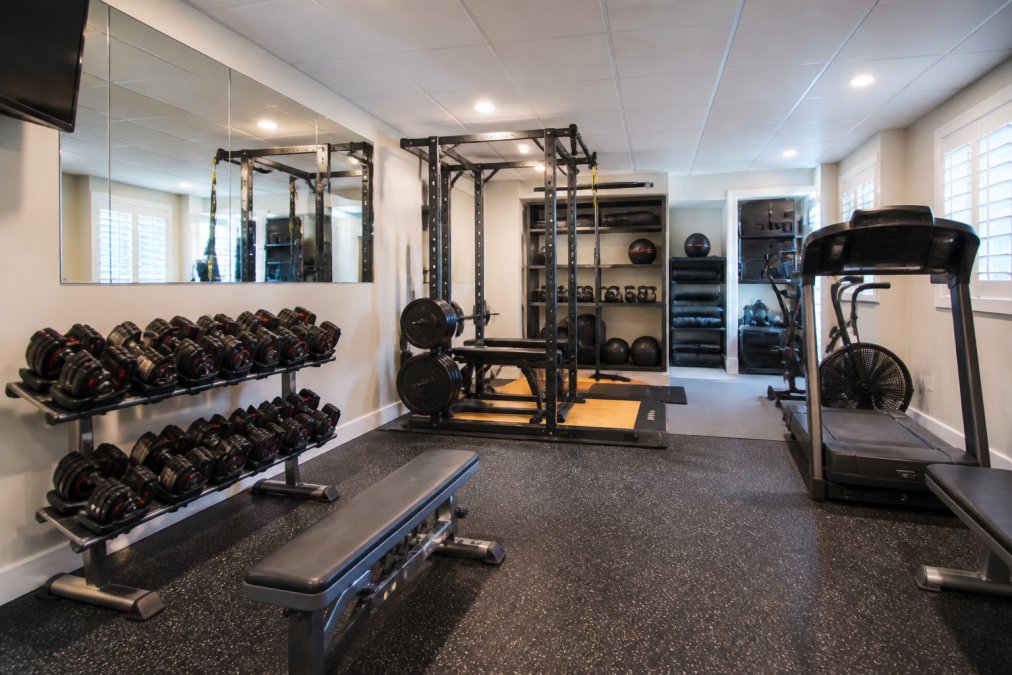
Strength Training Equipment
A power rack is the centerpiece of a strength-focused basement gym. The Titan Fitness T-3 Series Power Rack offers excellent value with a 1,100 lb weight capacity at a lower price point. The Rogue R-3 Power Rack provides superior build quality and Westside hole spacing, though it costs more. Both require bolting to the floor and adequate ceiling height (at least 7 feet for squats and overhead presses).
Adjustable dumbbells like the Bowflex SelectTech 552 replace multiple sets of traditional weights, saving space and money. They adjust from 5 to 52.5 lbs in small increments. The main limitation is maximum weight; advanced lifters who regularly lift above 50 lbs per hand will outgrow them. For most home gym users, adjustable dumbbells are a smart investment.
Benches, barbells, and weight plates round out a strength setup. A flat bench with adjustable incline/decline capability handles pressing movements and dumbbell work. A quality barbell rated for 700+ lbs handles most home training needs.
Cardio and Functional Training Options
A stationary bike like the Peloton Bike offers structured, engaging workouts with live and on-demand classes. The main drawback is the ongoing monthly subscription cost and large footprint. Suspension trainers like the TRX HOME2 System provide full-body functional training using bodyweight resistance. They’re extremely portable and require minimal floor space.
Jump ropes, medicine balls, kettlebells, and resistance bands round out functional training options. These tools are affordable, space-efficient, and versatile. A kettlebell in the 25-40 lb range handles most functional movements. For most home gym owners, a power rack, adjustable dumbbells, a bench, and functional tools (kettlebell, bands, jump rope) cover 80% of training needs.
Building a basement gym requires planning across flooring, ventilation, electrical, and structural systems. These challenges are solvable with the right approach. Berry Basements specializes in transforming basements into functional spaces that handle the unique demands of a home gym, from managing moisture and installing proper ventilation to ensuring your floor can support heavy equipment safely. If you’re ready to convert your basement into a dedicated fitness space, a free estimate from Berry Basements will clarify what’s needed to build a gym that lasts.
| Component | Purpose | Priority | Notes |
|---|---|---|---|
| Rubber flooring or mats | Floor protection and shock absorption | High | Moisture barrier required underneath |
| Overhead LED lighting | Visibility and form checking | High | At least 50 foot-candles recommended |
| Wall-to-wall mirrors | Form checking and space illusion | Medium | Glassless mirrors are safer in basements |
| Dehumidifier | Moisture and mold control | High | Essential for basement environments |
| Power rack or dumbbells | Core strength training | High | Choose based on space and goals |
| Storage solutions | Organization and safety | Medium | Wall-mounted racks save floor space |
| Air purifier | Air quality and odor removal | Medium | Activated carbon filters eliminate sweat smell |
Frequently Asked Questions
What's the best flooring for a basement gym?
Rubber flooring and high-density exercise mats are top choices for basement gyms. Rubber flooring in thicknesses of 1/4 to 3/8 inch provides excellent shock absorption, sound dampening, and protection from dropped weights. Exercise mats work well for cardio and functional training areas. The choice depends on your equipment type and budget. Rubber flooring handles heavy barbell training better, while mats suit lighter cardio workouts. Both options protect your concrete subfloor from damage and reduce noise that travels through the structure.
How do you manage moisture in a basement gym?
Start with a moisture barrier on your concrete subfloor before installing flooring. Use a dehumidifier to keep humidity below 50 percent, which prevents mold growth and equipment rust. Ensure proper HVAC ventilation pulls moist air out of the space. If your basement has had moisture issues, professional waterproofing should be completed before gym setup. Good air circulation from fans or HVAC vents also helps. Check your flooring regularly for signs of moisture underneath, especially in older basements without waterproofing.
What ventilation does a basement gym need?
Basement gyms require both air circulation and humidity control. Install or upgrade HVAC ventilation to bring fresh air in and remove stale, humid air. A standalone air purifier and fan combo handles odors and improves air quality in spaces without ducted ventilation. Ceiling height matters, if your basement has low clearance, ensure airflow isn't blocked by equipment. Dehumidifiers work alongside ventilation to manage moisture from sweat and condensation. Without proper ventilation, basements become stuffy and humidity rises, creating an uncomfortable workout environment and risking mold.
How do I set up an unfinished basement gym?
Start by addressing structural basics: install a moisture barrier on the concrete, add flooring (rubber or exercise mats), and ensure adequate lighting with overhead LEDs or strip lighting. Define your workout zones, separate strength training areas from cardio zones to optimize space. Install wall-mounted storage and a dumbbell rack to keep equipment organized and off the floor. Check ceiling height for equipment like squat racks and pull-up bars. Add mirrors to one wall for form checking. Finally, ensure electrical outlets are available for equipment like treadmills or air purifiers. Professional contractors can handle complex tasks like waterproofing and structural modifications.
What equipment works best in a basement gym?
Choose equipment based on your available space and workout style. Power racks and squat racks work well for strength training but need adequate ceiling height and floor space. Adjustable dumbbells save space compared to full dumbbell sets. Suspension trainers like TRX systems need minimal floor footprint and work well in tight spaces. Stationary bikes and rowing machines suit cardio zones. Exercise mats protect flooring during functional training. Start with versatile equipment that matches your fitness goals and the space's dimensions. Heavy equipment like power racks may require bolting to the floor for stability on concrete.
EXTERNAL LINKS USED:
- [EXTERNAL_LINK: OSHA guidelines on workplace ventilation and air quality | osha.gov]
- [EXTERNAL_LINK: EPA recommendations for basement moisture control and mold prevention | epa.gov]
- [EXTERNAL_LINK: American Society of Home Inspectors guide to basement structural assessment | ashi.org]
This article was written using GrandRanker