

Table of Contents
- Identify the Source of Basement Moisture
- Interior Waterproofing Methods for Damp Basements
- Exterior Waterproofing Solutions and Excavation
- Best Basement Waterproofing Sealers and Coatings
- Understanding Basement Waterproofing Cost and ROI
- Long-Term Maintenance and Monitoring
- When to Call a Professional for Basement Waterproofing
- Conclusion
Last Updated: August 15, 2026
Identify the Source of Basement Moisture
Before waterproofing a damp basement, identify what’s causing the moisture. Water enters through two primary mechanisms: hydrostatic pressure from groundwater pushing against foundation walls, and surface seepage from water pooling near the foundation. Hydrostatic pressure builds when water table levels rise above your basement floor, forcing water through concrete porosity and cracks. Surface seepage occurs when rain or snowmelt collects around your foundation and penetrates through cracks, joints, and porous concrete. The distinction matters because treating each requires different methods.
Recognizing Signs of Hydrostatic Pressure
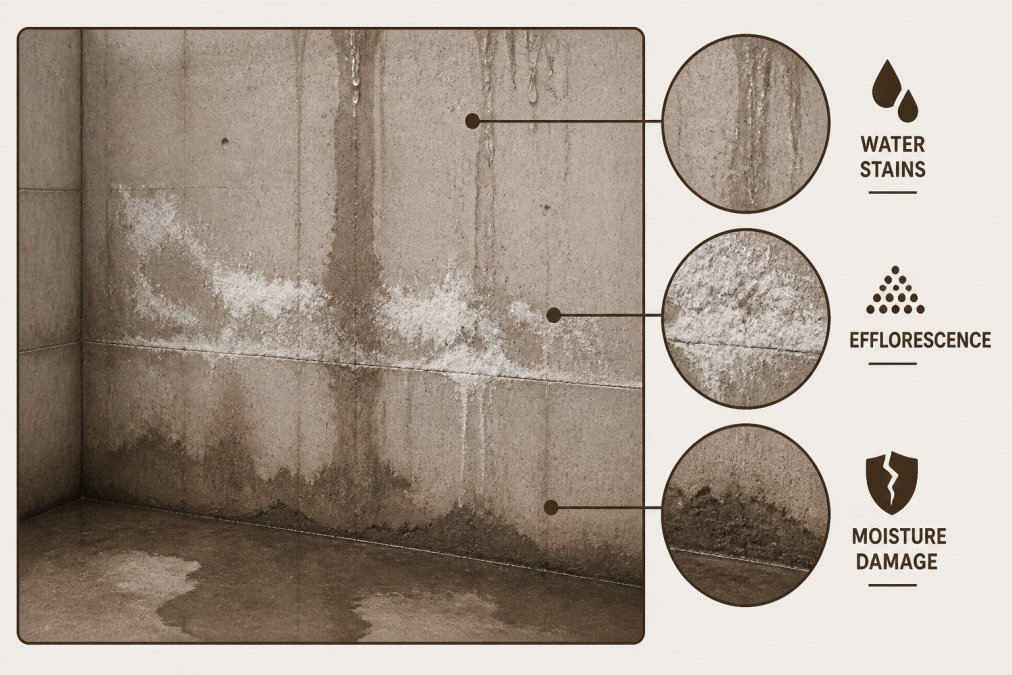
Hydrostatic pressure creates distinctive damage patterns. Water typically appears along the cove joint where the basement floor meets the foundation wall, or seeps through vertical cracks. You might notice efflorescence, white chalky mineral deposits that form when water dissolves salts in concrete and leaves them behind as it evaporates. Check for bowing or cracking in foundation walls themselves, significant hydrostatic pressure can deform walls inward. Use a moisture meter to measure concrete moisture content at different heights; consistently high readings across the wall indicate hydrostatic pressure rather than localized seepage.
Checking for Condensation and Surface Seepage
Not all basement moisture comes from outside. On warm, humid days, condensation forms on cold concrete surfaces. To test whether you have condensation, tape a plastic sheet to the wall for 24 hours. If moisture collects under the plastic, it’s condensation. If moisture appears on the concrete side, it’s seepage from outside.
Surface seepage typically shows up in corners, along the bottom of walls, or near window wells with darker, concentrated water stains. If your basement stays dry during winter but gets damp in spring when snow melts or after heavy rain, you’re dealing with surface water rather than hydrostatic pressure.
Interior Waterproofing Methods for Damp Basements
Interior waterproofing addresses moisture already inside your basement. This approach is faster and less disruptive than exterior work since it doesn’t require excavation around your foundation. However, it manages water that has already breached the exterior rather than stopping it at the source. Berry Basements can provide interior solutions for moisture issues, especially when exterior excavation isn’t feasible due to landscaping, property lines, or budget constraints.
Sealing Cracks and Concrete Repairs
Foundation cracks are the primary entry point for water infiltration. Hairline cracks can transmit significant water volumes because concrete’s porosity allows moisture to wick through. For cracks wider than 1/8 inch, use epoxy sealant injected under pressure. Epoxy bonds chemically to concrete and creates a waterproof seal that accommodates concrete expansion and contraction. For hairline cracks, latex cement works effectively and is easier to apply, though it doesn’t last quite as long.
The cove joint, where the floor meets the wall, requires special attention as hydrostatic pressure concentrates here. Chip out existing joint material, clean thoroughly, and fill with hydraulic cement, which expands as it cures and creates a tighter seal. Follow with flexible sealant on top to accommodate movement.
Installing Vapor Barriers and Sub-Floor Drainage
A vapor barrier reduces moisture vapor transmission through the concrete floor, preventing moisture from evaporating into your basement air and reducing dampness and mold growth. Install 6-mil polyethylene sheeting over the entire floor, overlapping seams by at least 12 inches and taping them sealed.
For more serious moisture issues, install a sub-floor drainage system with perforated drainage tile or dimpled drainage matting under the floor that channels water to a sump pump. This captures water before it seeps through concrete and removes it mechanically, far more effective for basements with persistent moisture problems.
Exterior Waterproofing Solutions and Excavation
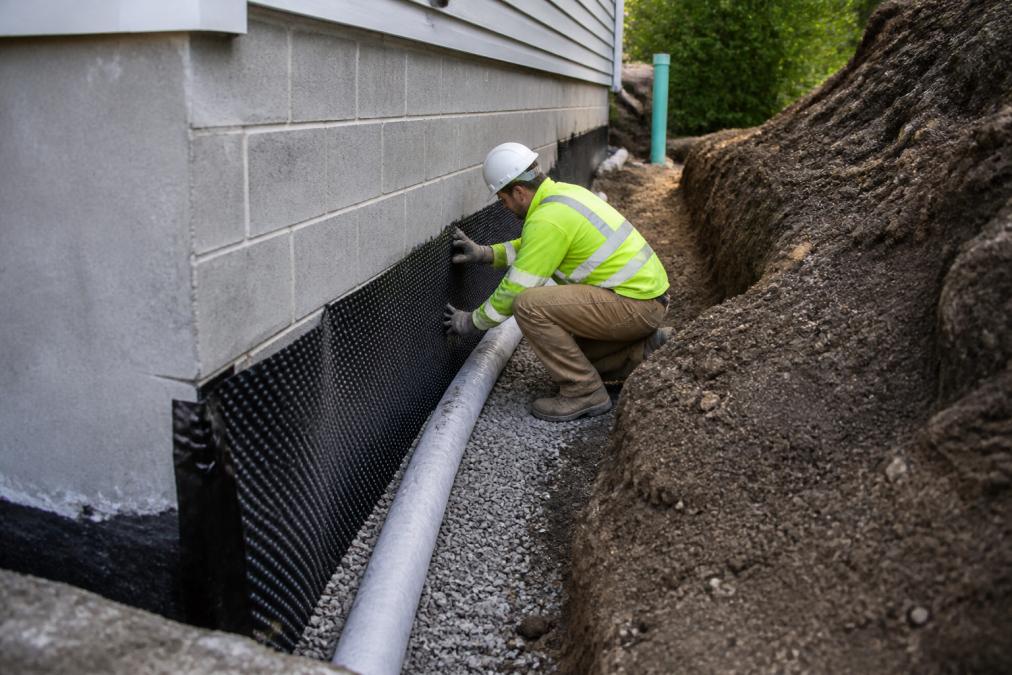
Exterior waterproofing stops water before it reaches your foundation, addressing the problem at its source rather than managing water already entered. Excavation exposes your foundation wall so you can apply waterproofing membranes, install drainage systems, and correct grading issues that funnel water toward your home.
Installing French Drains and Perimeter Drainage Systems
A French drain is a gravel-filled trench with perforated drainage tile that collects groundwater and channels it away from your foundation. Install the drainage tile at the foundation base, sloping gently away from the house (typically 1% slope). Surround the tile with coarse gravel and landscape fabric to prevent soil from clogging the perforations. The French drain connects to daylight drainage if your property slopes away, or to a sump pump if water must be pumped out. Poor drainage tile installation is one of the most common reasons exterior waterproofing fails.
Managing Grading and Surface Water Diversion
Grading is often the cheapest and most overlooked solution. Soil should slope away from your foundation at least 6 inches of drop over 10 feet of horizontal distance, preventing rainwater and snowmelt from pooling near your foundation. Install or extend downspout extensions to direct roof runoff at least 4-6 feet away from the foundation. For properties where grading is impossible, consider installing a surface water diversion system such as a swale or French drain at the surface level that captures runoff before it reaches the foundation perimeter.
Best Basement Waterproofing Sealers and Coatings
Once your foundation is exposed and cleaned, waterproofing membranes create a barrier between concrete and surrounding soil. These products vary in application method, durability, and cost.
Epoxy and Latex Cement Options
Epoxy sealers create a hard, plastic-like coating that bonds chemically to concrete, lasting 10-15 years or longer with excellent water intrusion protection. However, epoxy is more expensive and requires careful surface preparation. Latex cement coatings are water-based, easier to apply, and less expensive, suitable for moderate moisture conditions. For serious hydrostatic pressure, epoxy’s superior adhesion and durability justify the higher cost. For surface seepage or condensation management, latex cement provides adequate protection at lower cost.
Waterproofing Membranes and Foundation Wall Protection
Liquid-applied waterproofing membranes are sprayed or rolled onto the foundation wall and cure to form a flexible, seamless barrier that accommodates concrete movement. Sheet membranes, typically made of bitumen or synthetic rubber, are adhered directly to the foundation wall and work particularly well in areas with severe hydrostatic pressure. Drainage mats installed over the waterproofing membrane create an additional protection layer, channeling any water that penetrates the membrane down to the drainage system. The combination of waterproofing membrane plus drainage mat is considered best practice for serious moisture problems.
Understanding Basement Waterproofing Cost and ROI
The investment required to waterproof a damp basement varies based on the moisture source, problem extent, and whether you’re doing interior work only or combining interior and exterior solutions.
DIY vs. Professional Waterproofing Investment
Interior waterproofing is more DIY-friendly than exterior work. Sealing cracks, applying sealers, and installing vapor barriers are tasks many homeowners can handle with basic tools. Exterior waterproofing almost always requires professional help, excavation requires equipment and expertise, and mistakes can damage utilities or the foundation itself.
The return on investment for basement waterproofing is substantial. A dry basement enables finished living space, which increases home value significantly. Beyond resale value, waterproofing prevents mold growth, protects structural integrity, and eliminates health risks associated with mold exposure.
Long-Term Maintenance and Monitoring
Waterproofing requires ongoing attention to remain effective. Regular maintenance prevents small problems from becoming major water intrusion events.
Preventing Efflorescence and Structural Damage
Efflorescence indicates water is moving through your concrete. Prevent it by managing moisture through proper drainage and ventilation, and address any new moisture sources immediately. Monitor foundation walls for new cracks, those wider than 1/4 inch or appearing suddenly should be inspected professionally as they might indicate structural movement. Use a moisture meter periodically to track concrete moisture levels; climbing readings indicate a developing problem.
Sump Pump Maintenance and Smart Home Integration
Test sump pumps quarterly by pouring water into the sump pit to ensure the float switch activates and the pump discharges properly. Replace pumps every 7-10 years as they eventually fail without warning. Install a battery backup system so your pump continues operating during power outages, which often coincide with heavy rain. Smart home moisture sensors can monitor your basement continuously and alert you to rising humidity or unexpected water intrusion.
When to Call a Professional for Basement Waterproofing
Call a professional if you’re dealing with hydrostatic pressure, water appearing at the cove joint, bowing walls, or moisture appearing during dry periods. These signs indicate groundwater is actively pushing against your foundation, requiring drainage systems that need proper installation and slope.
If cracks are wider than 1/4 inch, if you see multiple cracks, or if cracks appear to be growing, have a professional evaluate them. For exterior waterproofing, professional installation is essential, improper drainage system installation is one of the most common reasons exterior waterproofing fails. If you’re planning a basement renovation, address waterproofing first. Moisture problems discovered mid-renovation create delays and cost overruns. Berry Basements brings expertise in managing complex foundation issues, ensuring drainage systems work correctly, and integrating waterproofing with basement finishing projects.
A damp basement limits how you can use your home and puts your foundation at risk. Whether addressing minor surface seepage or serious hydrostatic pressure, the right waterproofing approach depends on understanding your specific moisture source and choosing solutions that match your situation’s severity.
Interior methods work well for mild moisture issues and are less disruptive, while exterior solutions provide long-term protection by stopping water before it reaches your foundation. Many homeowners benefit from combining approaches, managing surface water through grading and downspout extensions while adding interior protection as backup.
If you’re converting your basement into finished living space, waterproofing should be your first priority. At Berry Basements, we’ve helped homeowners throughout the region transform damp, unusable basements into dry, functional spaces including home theaters, gyms, and additional bedrooms. Our collaborative approach ensures waterproofing solutions integrate seamlessly with your renovation vision, protecting your investment while creating the customized living space you envision. Get a free estimate and let our licensed contractors assess your basement’s specific moisture challenges.
Frequently Asked Questions
How do I know if my basement has hydrostatic pressure issues?
Signs of hydrostatic pressure in basement include water seeping through foundation cracks, bowing walls, and water pooling in the cove joint where the floor meets the wall. You may also notice efflorescence (white mineral deposits) on concrete surfaces, which indicates water is moving through the foundation. Use a moisture meter to confirm elevated moisture levels. If you see these signs, the water table is pushing against your foundation and requires professional drainage solutions like a sump pump or French drain system.
What is the most cost-effective basement waterproofing method?
For minor moisture issues, interior sealers and vapor barriers offer the lowest upfront cost and can be applied without excavation. However, basement waterproofing cost varies significantly based on the moisture source. If hydrostatic pressure is the problem, exterior solutions like French drains provide better long-term protection but require excavation. Interior methods address symptoms; exterior methods address the root cause. A professional inspection can determine which approach fits your situation and budget. Contact us for a free estimate to understand your options.
Can I waterproof my basement without digging up the exterior?
Yes. Interior methods like applying concrete sealers, installing vapor barriers, and sealing cracks work without excavation. However, these address moisture symptoms rather than the underlying water intrusion. If you have serious seepage or hydrostatic pressure, interior solutions alone may not prevent long-term water damage. Many homeowners combine interior waterproofing (quick, affordable) with partial exterior work on problem areas. The best approach depends on your moisture source and budget. We recommend a professional assessment to determine what will actually solve your specific issue.
What is the difference between best basement waterproofing sealers?
Epoxy sealants offer superior adhesion and durability for active water intrusion, while latex cement provides easier application and lower cost for preventive coating. Waterproofing membranes create a physical barrier against moisture vapor transmission and are ideal for cinder block or older foundations. Concrete sealers vary in penetration depth and water resistance ratings. The best choice depends on your foundation material, moisture severity, and whether water is actively seeping. Professional-grade products typically last 10-15 years, while consumer-grade options may need reapplication every 3-5 years.
This article was written using GrandRanker