

Table of Contents
- What to Look for in a Basement Contractor
- How to Verify Contractor License and Insurance
- Questions to Ask a Basement Contractor Before You Sign
- Moisture, Waterproofing, and Structural Assessments
- Payment Schedules, Quotes, and Red Flags When Hiring a Contractor
- Average Basement Renovation Timeline: What to Expect
- Choosing the Right Basement Contractor for Your Project
Last Updated: August 12, 2026
What to Look for in a Basement Contractor
Choosing the right basement contractor is one of the most consequential decisions you’ll make in a home renovation. At Berry Basements, we’ve worked with homeowners across the Grand Rapids area since 2017, and we’ve seen firsthand how the wrong hire can turn a dream project into a costly, stressful ordeal. This guide walks you through exactly how to vet, question, and ultimately choose a basement contractor who will deliver on their promises.
The contractor selection process comes down to three core filters: credentials, experience, and character. Get all three right, and your renovation runs smoothly. Miss any one of them, and you’re taking a real gamble with a significant investment.
Licensing, Insurance, and Liability Coverage
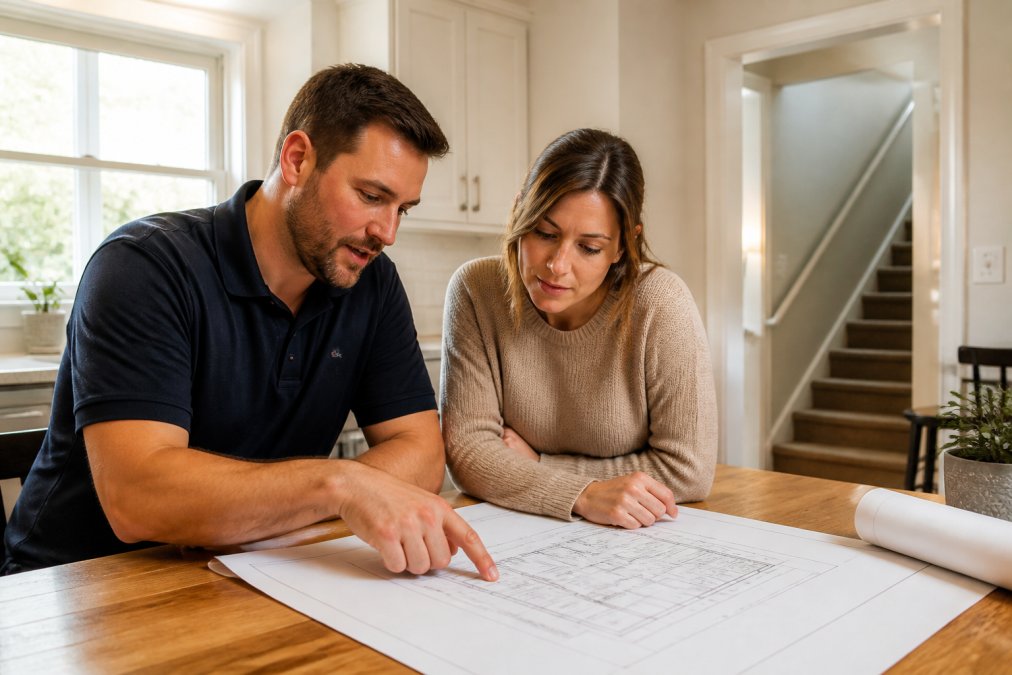
A licensed basement contractor is not optional. In most states, general contractors performing structural, electrical, or plumbing work are legally required to hold a state-issued contractor’s license. According to the National Association of State Contractors Licensing Agencies, licensing requirements vary by state, but the intent is consistent: protect homeowners from unqualified work.
Beyond licensing, verify that any contractor you’re considering carries two specific types of insurance: general liability coverage and workers’ compensation. General liability protects your property if something goes wrong. Workers’ comp protects you from being held financially responsible if a worker is injured on your property. Ask for certificates of insurance directly from the insurer, not just a copy the contractor hands you.
A workmanship warranty is another non-negotiable. Reputable contractors stand behind their work with a written guarantee. If a contractor hesitates to put warranty terms in writing, that hesitation tells you everything.
Basement-Specific Experience and Portfolio
General contracting experience doesn’t automatically translate to basement expertise. Basement renovations involve a specific set of challenges: moisture mitigation, egress window installation, subfloor systems, low ceiling clearances, and working around existing HVAC and plumbing runs. A contractor who primarily builds decks or remodels kitchens may not have the technical depth to handle these correctly.
Ask to see a portfolio of completed basement projects specifically. Request photos from projects similar to yours in scope: finished living spaces, home theaters, added bedrooms, or wet bars. Better still, ask for references from those projects and call them. Berry Basements, for example, has completed projects on Leonard Street, Brickley Street, Hideaway Court, and Red Barn Drive, and clients from those projects are available to speak with prospective customers.
The real difference between a basement specialist and a generalist comes down to how they talk about problems. A specialist will immediately raise moisture assessment, insulation requirements, and egress compliance. A generalist will talk about finish materials first.
Ask any contractor you’re interviewing to walk you through how they’ve handled a project where unexpected moisture was discovered mid-renovation. Their answer will reveal both their technical competence and their communication style under pressure.
How to Verify Contractor License and Insurance
Verifying a contractor’s license is simpler than most homeowners realize. Most states maintain a publicly searchable online database through their licensing board or department of consumer affairs. Search the contractor’s name or business name, confirm the license is active, and check whether any complaints or disciplinary actions have been filed.
To verify insurance, request a Certificate of Insurance and ask the contractor to have their insurer send it directly to you. A legitimate contractor won’t balk at this. While you’re reviewing it, confirm the coverage amounts are meaningful, not just technically present. Liability coverage should be substantial enough to cover the scope of your project.
The Federal Trade Commission’s guide on hiring contractors recommends verifying credentials through your state’s licensing board before signing any contract. This step takes fifteen minutes and eliminates a significant category of risk.
One more check: look up the contractor’s business name with your state’s Secretary of State office to confirm they’re a registered business entity. Fly-by-night operators often work under informal names without formal registration.
Questions to Ask a Basement Contractor Before You Sign
The interview stage is where most homeowners leave money and protection on the table. They ask about price and timeline, then stop. The questions that actually protect you go much deeper.
About the Scope of Work and Contract Terms
A well-written contract is your primary protection in any home improvement project. Before signing, you should have clear answers to all of the following:
- What is explicitly included in the scope of work, and what is excluded?
- How are change orders handled, and what is the approval process?
- What is the payment schedule, and what milestones trigger each payment?
- What does the workmanship warranty cover, and for how long?
- Who are the subcontractors, and are they licensed and insured?
- What happens if the project runs over the estimated timeline?
An itemized quote is also essential. A single lump-sum number tells you very little. An itemized breakdown lets you understand where costs are concentrated and gives you a basis for comparing quotes from different contractors accurately.
Never sign a contract that requires a large upfront payment before work begins. A common red flag when hiring a contractor is a demand for more than 10-15% of the total project cost as a deposit. Legitimate contractors have supplier relationships that don’t require you to front the entire material cost before a single wall goes up.
About Permits, Building Codes, and Subcontractors
Permits are not bureaucratic nuisance. They’re your legal protection. A finished basement that wasn’t permitted can create serious problems when you sell your home, and in some cases, you can be required to tear out finished work that doesn’t meet code. According to the National Association of Home Builders, unpermitted work is one of the most common sources of disputes between homeowners and contractors.
Ask every contractor directly: "Will you pull all required permits for this project?" If they suggest skipping permits to save time or money, walk away. That suggestion is not a shortcut; it’s a liability they’re transferring to you.
Building codes for basement finishing typically address egress window sizing, ceiling height minimums, electrical circuit requirements, insulation R-values, and fire egress. A contractor who knows these requirements cold is a contractor who does this work regularly.
On subcontractors: most basement renovations involve multiple trades. Electrical, plumbing, HVAC, and framing are often handled by separate licensed subcontractors. Ask who they are, verify their licenses, and confirm they’re covered under the general contractor’s insurance or carry their own.
Moisture, Waterproofing, and Structural Assessments
This is the section most homeowners skip and most contractors don’t raise proactively. It’s also where the most expensive surprises hide.
A proper moisture assessment should happen before any design decisions are finalized. Moisture in a basement can come from three sources: groundwater intrusion through foundation walls or floor, condensation from interior humidity, or water infiltration from surface drainage. Each has a different solution, and treating the wrong one wastes money while leaving the real problem intact.
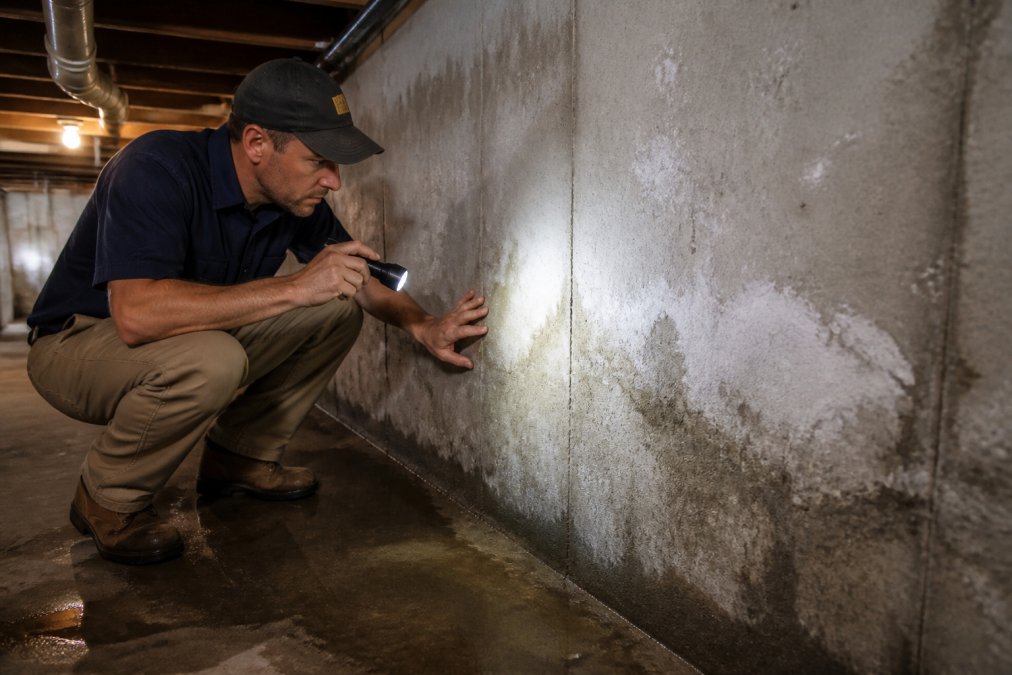
Ask your contractor to walk the basement with you before the project begins and explain what they observe. Signs of moisture issues include efflorescence on concrete walls, staining at the base of walls, musty odors, and visible cracks in the foundation. A contractor who doesn’t raise these observations proactively is either inexperienced or not paying attention.
Moisture mitigation options range from interior drainage systems and sump pump installation to exterior waterproofing and crack injection. The right solution depends on the source and severity of the problem. Some contractors handle waterproofing in-house; others subcontract it. Either approach can work, but you need clarity on who is responsible and what warranty covers the waterproofing work specifically.
Structural integrity is a related concern. If you’re planning to add a bathroom, a bedroom, or significant weight-bearing elements, a structural assessment confirms the existing framing and foundation can support the changes. This is particularly relevant if you’re adding egress windows, which require cutting through foundation walls.
Moisture and structural issues discovered mid-renovation almost always cost more to address than if they’d been identified and planned for upfront. A contractor who raises these concerns before the contract is signed is demonstrating exactly the kind of transparency you want on a major project.
Payment Schedules, Quotes, and Red Flags When Hiring a Contractor
A reasonable payment schedule for a basement renovation typically follows project milestones: a modest deposit at signing, a payment when framing is complete, another when rough-in work passes inspection, and the final payment at project completion. This structure keeps the contractor motivated to finish and protects you from overpaying for incomplete work.
Get at least three quotes before deciding. When comparing them, look beyond the total number. An itemized quote breaks costs into labor, materials, permits, and subcontractor fees. This level of detail lets you identify where quotes differ and ask informed questions rather than simply picking the lowest number.
| Red Flag | What It Signals | What to Do |
|---|---|---|
| Large upfront deposit required | Cash flow problems or intent to disappear | Walk away or negotiate milestone payments |
| Verbal-only quote | No accountability for scope | Require full written, itemized quote |
| Permit-skipping suggestion | Liability transfer to homeowner | Treat as disqualifying |
| No written warranty | Low confidence in workmanship | Ask for written terms or move on |
| Pressure to sign immediately | Preventing you from comparing options | Take the time you need |
| Unusually low bid | Hidden costs or substandard materials | Ask for itemized breakdown |
Price variation between quotes is normal. What matters is understanding what each quote includes and what it excludes. A lower number that excludes permits, disposal, or certain finish materials isn’t actually lower once those items are added back.
Average Basement Renovation Timeline: What to Expect
The average basement renovation timeline runs between six and twelve weeks for a standard finishing project, though scope significantly affects this range. A basic finished space with drywall, flooring, and lighting sits at the shorter end. A project that adds a bathroom, a bedroom with egress window, and a home theater setup will run longer.
Here’s a general breakdown of what that timeline looks like in practice:
- Design and permitting (two to four weeks): Plans are finalized, permits are submitted, and approvals are obtained. This phase can’t be rushed; permit timelines are set by the municipality, not the contractor.
- Rough framing and moisture work (one to two weeks): Walls are framed, any waterproofing or structural work is completed, and egress windows are installed if applicable.
- Rough-in mechanical work (one to two weeks): Electrical, plumbing, and HVAC rough-in work is completed and inspected. No drywall goes up until inspections pass.
- Insulation and drywall (one week): Insulation is installed to meet local code requirements, followed by drywall hanging and finishing.
- Finish work (two to three weeks): Flooring, trim, paint, fixture installation, and final touches are completed.
- Final inspection and punch list (one week): The project is inspected, any outstanding items are addressed, and the space is handed over.
Timeline disruptions most commonly come from permit delays, inspection scheduling, and material lead times. A contractor who builds buffer into the schedule and communicates proactively when delays occur is worth their weight in finished square footage.
The National Association of the Remodeling Industry’s project planning guidance notes that clear milestone communication is one of the strongest predictors of homeowner satisfaction in renovation projects.
Choosing the Right Basement Contractor for Your Project
The right basement contractor isn’t necessarily the cheapest or the fastest. It’s the one who combines verified credentials, relevant experience, transparent communication, and a clear contract that protects both parties.
Here’s a practical checklist to use when making your final decision:
- License verified through state licensing board
- General liability and workers’ comp insurance confirmed directly with insurer
- Portfolio of basement-specific projects reviewed
- References from similar projects contacted
- All permits included in scope of work
- Itemized written quote received and compared
- Payment schedule tied to project milestones
- Written workmanship warranty included in contract
- Moisture and structural assessment completed before design is finalized
- Subcontractors identified and their credentials confirmed
- Change order process documented in contract
- Communication expectations established in writing
The homeowners who have the best renovation experiences are the ones who treat the selection process seriously. They ask hard questions, verify answers independently, and choose based on trust and competence, not just price.
Berry Basements has built its reputation since 2017 by being the kind of contractor that passes every item on that checklist. Our collaborative process means clients understand what’s happening at every stage, and our commitment to quality means we don’t cut corners when the walls are open and no one is watching. If you’re ready to talk through your project, request a free estimate and let’s figure out what your basement can become.
Frequently Asked Questions
Should I hire a general contractor or a basement specialist?
A basement specialist brings focused experience with the unique challenges below grade: moisture mitigation, egress windows, subfloor installation, and insulation requirements specific to below-grade spaces. A general contractor can manage the project, but may rely heavily on subcontractors who lack that depth. For a full basement finishing project, a contractor whose primary work is basements will typically anticipate problems faster, pull the right permits, and deliver a more consistent finish.
What questions should I ask a contractor before signing a contract?
Ask for proof of licensing and liability coverage, a fully itemized quote, a clear payment schedule, and a written project timeline. Ask who pulls the building permits, whether the work includes a workmanship warranty, and how change orders are handled. Find out which tasks subcontractors will complete and how the contractor manages them. Requesting references from comparable basement finishing projects is also a reasonable step before committing to any scope of work.
What are red flags when hiring a contractor?
The biggest red flags include requests for large upfront cash payments, no written contract, vague or verbal-only estimates, and an inability to provide a current license number or proof of insurance. Contractors who pressure you to decide immediately, cannot supply references, or refuse to pull building permits themselves are also warning signs. A missing workmanship warranty or a reluctance to put the project timeline in writing suggests the contractor may not stand behind the finished work.
How do I verify a contractor's license and insurance?
Each state maintains a public contractor license lookup through its licensing board or department of licensing and regulatory affairs. Search the contractor's full legal business name and license number to confirm active status. For insurance, ask the contractor to have their insurer send a certificate of liability coverage directly to you, do not accept a copy the contractor provides themselves. Confirm the policy covers both property damage and personal injury for the duration of your renovation project.
How much does it cost to hire a contractor to finish a basement?
Basement finishing costs vary widely based on square footage, finish level, HVAC considerations, plumbing additions, and materials selected. Projects that include a home theater, bathroom, or egress windows carry higher costs than a basic open recreation room. Because pricing depends on the specific scope of work, site conditions, and local labor rates, the most reliable step is to request an itemized quote from a licensed contractor after a site inspection, that gives you a number tied to your actual project.
What should be included in a basement remodeling contract?
A solid basement remodeling contract should include a detailed scope of work, an itemized cost breakdown, a payment schedule tied to project milestones, the project start and estimated completion date, a change order process, permit responsibilities, subcontractor disclosures, a workmanship warranty, and a clause covering how disputes are resolved. Any verbal promises about finish materials, timelines, or design details should be written into the contract before you sign, verbal agreements are difficult to enforce.
A basement renovation is a significant investment, and the contractor you choose determines whether that investment pays off. Berry Basements brings licensed expertise, a transparent process, and a track record of completed projects to every client relationship. From moisture assessment to final finish work, our team manages the complexity so you don’t have to. Get started with Berry Basements and turn your underutilized lower level into the space your family actually uses.
This article was written using GrandRanker